Get Full Government Meeting Transcripts, Videos, & Alerts Forever!
Get email alerts on the Land Use topic
No spam. Unsubscribe anytime.
Residents urge Margate commissioners to protect Carolina Golf Course amid rezoning talk
Summary
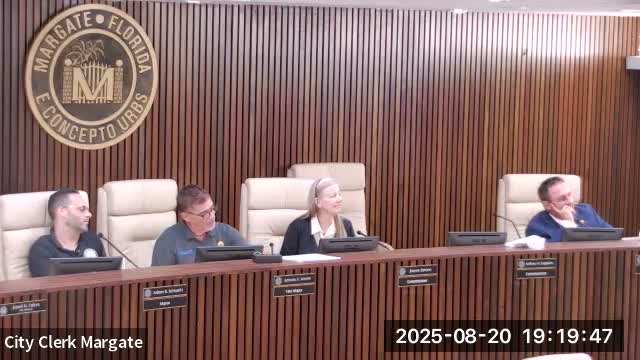
Residents of the Carolina Golf Course neighborhood told the Margate City Commission on Aug. 20 that they are closely watching any rezoning that could convert the course to development.
Residents of the Carolina Golf Course neighborhood told the Margate City Commission on Aug. 20 that they are closely watching any rezoning that could convert the course to development.
Julie Vandermuellen, who identified herself as a resident of the Carolina Golf Course community, said the rezoning request would conflict with the city’s long-standing planning commitments "whether it was in the 1989 comprehensive plan or the new Margate 2." She urged the commission to honor past promises and protect the area’s open space.
"We feel left out, neglected, ignored, and we're angry," Vandermuellen said, urging elected leaders to act on residents’ concerns.
Commissioners and staff answered that the city has repeatedly cited the golf-course property for maintenance issues and that those citations have progressed to magistrate proceedings. A commissioner said the city’s legal authority requires the property be kept within certain maintenance standards—grass height, hedges and debris removal—but does not require the owner to maintain a manicured golf course.
Other residents pressed environmental and health concerns. Rich Zucchini described typical pesticide use on golf courses and called them "toxic dump[s]," arguing that redevelopment could include soil remediation and public-health improvements. He also warned commissioners against publicly committing to a position before a formal application is filed, saying the Ethics Commission should review premature public statements that could require recusal.
Some attendees questioned whether a commissioner’s earlier public comments favoring redevelopment created a conflict of interest. In response, the commissioner said he lives in the community but does not own course property, and that speaking as a resident does not, by itself, create an ethics violation.
Commissioners discussed planning and mitigation steps that would apply if an applicant seeks rezoning, saying contaminated areas would likely require remediation and that county and state approvals could be part of the process. Commissioner Rosano suggested the city consider having its own engineer review mitigation plans if rezoning is pursued.
The commission did not hold a vote on rezoning at the meeting; commissioners repeatedly told residents that any future hearing would present evidence, conditions and staff analyses before a formal decision.