Get Full Government Meeting Transcripts, Videos, & Alerts Forever!
Get email alerts on the Resident Advisory Committee topic
No spam. Unsubscribe anytime.
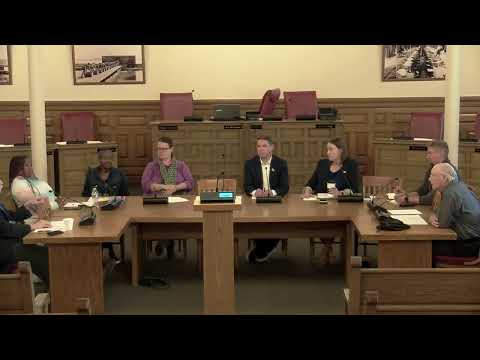
Syracuse governance panel weighs dissolving resident advisory committee after ethics finding
Summary
Michelle, Neighborhood & Business Development staff, told the Syracuse Housing Strategies Corporation Governance Committee that corporation counsel has advised that Resident Advisory Committee members would be subject to the same ethics and open‑meetings rules as board members, meaning they could not apply for organization funds during service and for two years after.
Michelle, Neighborhood & Business Development staff, told the Syracuse Housing Strategies Corporation Governance Committee that corporation counsel (city and outside counsel) has given a unanimous legal opinion that the ethics provisions applying to board members and staff also apply to any members of the Resident Advisory Committee. "That means basically in its simplest form, that residents would not be able to apply for funds through the organization if they were on that committee for the duration of their term on the committee and then for a period of two years after their term concludes," Michelle said.
The ruling prompted a discussion of two paths. Michelle outlined option A: amend or dissolve the enabling ordinance that creates the Resident Advisory Committee and instead use Neighborhood & Business Development convenings and existing neighborhood associations for community input. Option B, she said, would keep the committee but make the eligibility limitation explicit at the time of appointment so appointees understand they cannot apply for funds during their term and for two years afterward.
Mayor (unnamed) and other committee members said they had not anticipated that the ordinance language would create a practical barrier to resident participation. The Mayor said the council could revisit the ordinance language if it wants the committee to operate as originally intended. "If the council feels strongly about this, then we go with option A, working with Corp Council to get it right," the Mayor said.
Several councilors and committee members advocated for different approaches. One participant suggested keeping neighborhood associations and informal steering committees as the primary way to gather resident input while forming a separate appointed advisory body composed of housing experts (development, finance) to provide technical guidance. Michelle cautioned that a formal, appointive committee would be bound by public authorities law and open meetings requirements and could increase staff workload. "Open meetings would also apply," Michelle said when asked.
The committee did not take a formal vote on changing the ordinance. The Mayor said he would contact corporation counsel and the council and expected to have clarity within a week on whether to pursue ordinance revisions or proceed with the committee under the current constraints. Michelle emphasized staff will either need to appoint members consistent with counsel’s guidance or move to dissolve the committee to remain compliant.
Next steps: the Mayor will loop in corporation counsel and work with council members to determine whether to amend the ordinance’s language or remove the committee provision; the committee will take up any next steps after that legal clarification.