Get Full Government Meeting Transcripts, Videos, & Alerts Forever!
Get email alerts on the Opioid Settlement Funding topic
No spam. Unsubscribe anytime.
Burke County advisory committee backs three providers to expand substance-use services
Summary
After presentations and questions about harm reduction and Medicaid sustainability, the Burke County advisory committee voted to endorse contracting with A Caring Alternative, High Country Community Health and SPARK to expand treatment, outreach and family-centered recovery services funded through the county's opioid settlement process.
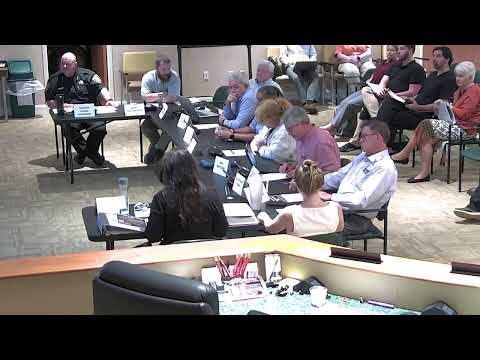
Burke County's opioid advisory committee on Aug. 1 heard detailed proposals from three local and regional providers and unanimously endorsed moving all three to contract negotiations with the county.
Dr. Katie Samuels, who led the meeting, framed the session as a final review after an internal and committee vetting process. "This meeting was called as a time for us to be able to hear from the providers that submitted proposals for our very first RFP process," she said, noting the RFP was released June 13 and closed July 11.
The three programs recommended to proceed to contracting were: - A Caring Alternative: up to $300,000 requested to establish Substance Abuse Comprehensive Outpatient Treatment (SACOT) and Substance Abuse Intensive Outpatient Program (SA IOP) inside Burke County, including morning and evening groups and medication-assisted treatment integrated with peer supports; presenters said the model will use performance-based, fee-for-service milestones. "We will also have family counseling and training, biochemical urine drug screens on a weekly basis," said Renee Brackett, adult services director at A Caring Alternative. - High Country Community Health: slide materials showed a $375,000 request for expanded low-barrier MAT, street outreach, rapid Hep C testing, mobile dispensing of Suboxone and hiring to increase clinical capacity. Alice Salthouse, High Country's CEO, said the federally qualified health center model and HRSA reimbursement pathways support long-term sustainability. County staff noted a discrepancy between the slide total and draft contract language and said they would revisit the total during contracting. - SPARK Services: up to $390,000 sought to pilot Family Centered Treatment Recovery (FCTR) in Burke County, an intensive family-based model that pairs family therapy with peer supports and contingency management; SPARK aims to serve 20 families in the contract year while pursuing Medicaid billing authorization. Terry Herman, SPARK's senior vice president, said the program would focus on rapid face-to-face engagement within 48 hours of referral.
Presenters emphasized performance measures and sustainability. High Country staff said the organization is already billing public insurance and expects initial settlement funding to expand capacity but not create long-term dependence on one-time funds. "This investment is not meant to disappear whenever the settlement dollars do," a High Country presenter said.
The meeting included a substantive debate over harm-reduction practices. A committee member warned that syringe exchange might normalize injection and "potentially increase the amount of people that are actually using." Clinicians from High Country and others defended harm reduction as a public-health tool to reduce transmission of HIV and hepatitis C and to engage people in treatment. Dr. Tom Meek, who described ethical ambivalence before working in outreach, said: "What in the h*** am I doing? I'm going to give these people needles." He continued that, from a public-health perspective, sterile needles decrease transmission and create a bridge to further care.
Committee members also pressed programs on operational details: how missed sessions would be handled, staffing credentials (LCAS and CADC were cited for clinical roles), space and scheduling for concurrent groups, tracking and diversion-prevention measures for MAT dispensing, and contingency plans if Medicaid coverage did not materialize. High Country described an in-house pharmacy and reporting systems; a committee member suggested adding contract language requiring adherence to SAMHSA diversion-prevention guidance and inventory reporting; presenters said federal and state oversight and existing reporting obligations cover much of that and that staffing for constant inventory audits might be impractical but that they are open to contract terms during negotiation.
The committee passed motions, by uplifted hands, to endorse A Caring Alternative, High Country Community Health and SPARK to proceed with contracting; the chair clarified the motions were to proceed to contracting rather than final awards. Staff said endorsed proposals will be taken to the Board of Commissioners at its next meeting and that contracts would be finalized in September if approved. The advisory committee's next meeting was set for Sept. 16.
The endorsements authorize staff to negotiate performance-based contracts that tie payment to agreed milestones and outcome metrics; final approval rests with the Burke County Board of Commissioners.