Get Full Government Meeting Transcripts, Videos, & Alerts Forever!
Get email alerts on the Public Works Paving topic
No spam. Unsubscribe anytime.
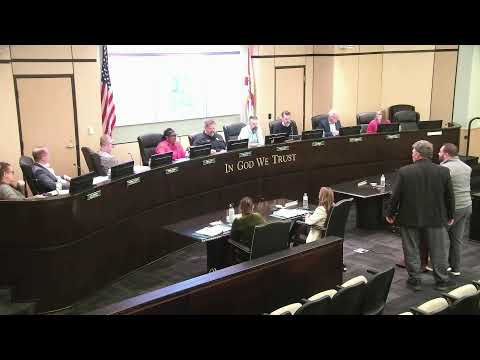
Panama City CRA backs $700,000-per-year paving plan, seeks vendor benchmarking before execution
Summary
The Panama City CRA voted 5-0 to commit multi-year CRA funds toward paving in Millville and Downtown North and authorized staff to implement an in‑house paving program pending vendor benchmarking and budget details.
Panama City’s Community Redevelopment Agency on Nov. 4 voted 5-0 to participate in an interlocal agreement with the city to fund multi‑year paving and resurfacing in CRA districts, and to support a staff proposal to perform a portion of that work with city crews.
Under the proposal, the CRA would commit $450,000 per year for five years for the Millville CRA district and $250,000 per year for five years for the Downtown North CRA district. Staff projected that, in year one, city crews using leased or purchased equipment could complete about 2.12 miles of soil‑improved full‑depth reclamation paving. Staff estimated purchasing a full‑size paver at about $275,000 or leasing one for six months with a $120,000 buyout option; housing department funds could supply approximately $350,000 for materials and rent equipment during start-up.
Public Works Director Clint Murphy said there is extensive cost data to support the city’s estimates and praised the staff proposal. "There is all a plethora of cost data out there, especially for asphalt and concrete, very common materials used. The state keeps a quarterly log," Murphy said, and added he believed staff’s numbers were conservative.
Deputy City Engineer Matt DeVito and other staff explained the in‑house method, including use of an "asphalt zipper" to incorporate cement powder and underlying soils, followed by grading and paving. Chair/staff emphasized the city does not intend to compete with the private sector and described the work as targeted at smaller residential streets that contractors may not economically program.
Board members expressed strong support for the concept but asked for vendor benchmarking and clearer multi‑year budget detail before the city commission considers the interlocal agreement. One board member urged staff to secure written benchmarking from private vendors to confirm that the in‑house approach is lower cost: "I would like us to, at least have from a vendor, us go to them and say, here's what we're willing to do and the cost ... What can you match or beat?" a member said.
Staff committed to provide the cost data and comparative quotes, and Public Works agreed to quarterly reports to the CRA tracking miles completed, material costs and staffing. The city commission is scheduled to consider the interlocal agreement on Nov. 18; the CRA’s action authorizes CRA funding and directs follow-up steps.
Board members also discussed workforce and sustainability issues: the plan includes four proposed new positions, and members asked for a multi‑year implementation map so staff can avoid hiring and then losing trained employees if funding is not sustained.
The CRA asked staff to return with vendor comparisons, a five‑year work map focused on low‑ and moderate‑income (LMI) areas, and a budget impact statement showing maintenance and material needs. The motion to approve CRA participation and next steps passed on a 5-0 roll call.