Get Full Government Meeting Transcripts, Videos, & Alerts Forever!
Get email alerts on the Higher Education Housing topic
No spam. Unsubscribe anytime.
Cal Poly tells San Luis Obispo council it will add thousands of beds, move to semesters in 2026
Summary
Cal Poly told the San Luis Obispo City Council it is expanding on‑campus housing (modular construction), moving from quarters to semesters in 2026 and planning year‑round operations; university and city leaders discussed impacts on neighborhood housing, event space and public safety.
Cal Poly officials told the San Luis Obispo City Council on Oct. 21 that the university expects to operate on semesters beginning fall 2026 and is planning a multi‑year program to add thousands of on‑campus beds to reduce pressure on neighborhood rentals.
"We are sitting at just over 23,000 students," Vice President Terrence Harris said, adding that roughly 22,300 are undergraduates and that Cal Poly had strong application demand. Harris said the university seeks to meet state enrollment targets while expanding residential and year‑round options: "year‑round operations" will create multiple enrollment on‑ramps and more opportunities for students to be on campus during spring and summer terms.
The conversion to semesters will shift academic calendars: commencement moves earlier (May 2027 instead of June 2027), classes will begin in August rather than September, and move‑in and welcome‑week timing will change. Harris said the change will be phased to avoid requiring faculty to teach all three terms and to preserve student experience.
On housing, Mike McCormick, Cal Poly's vice president for facilities management, said the university is using off‑site modular construction to speed delivery and reduce neighborhood disruption. He described the first building as seven stories and the second as 10 stories — "the first high rise in the county," he said — and gave bed counts for initial phases: "The first building is 500 and we're gonna be occupying 530 beds," and the next building about 720 beds. McCormick said the campus aims to deliver roughly one building per year and that the program will add several thousand beds over the next five to six years.
To support the housing expansion, Cal Poly officials said they are building major infrastructure on campus. McCormick described a planned 2,000,000‑gallon reservoir and a water‑reclamation facility that he said would allow the university to route more sewage to on‑campus treatment and use reclaimed water for irrigation, reducing campus potable water use by about 30%.
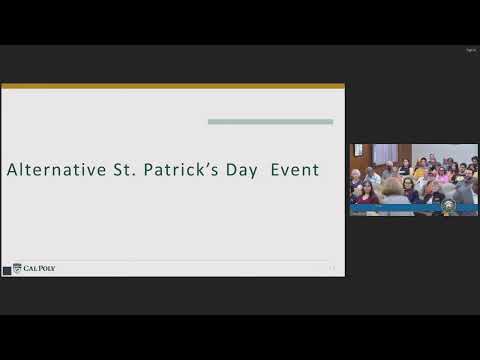
Alison Baird James, senior vice president for administration and finance, described student‑safety planning for St. Patrick's Day events, including a no‑guest policy in residence halls and an off‑campus alternative event designed with student leaders and public‑safety partners. She also said that beginning with the 2026 cohort, first‑ and second‑year students will be required to live on campus for two years to support retention and student success.
Council members asked about "Greek Row" style housing, large student gatherings and event space. Cal Poly officials said the campus is planning new "third spaces" for student gatherings and said they expect those facilities and the increase in on‑campus beds to reduce disruptive off‑campus parties in neighborhoods. Officials emphasized coordination with city and county law enforcement and noted early modest success reducing citations and some conduct issues in prior years with similar safety measures.
Why it matters: the university's projected increase in on‑campus housing and the shift to semesters will change when students are on campus and will affect rental demand in residential neighborhoods. City leaders and residents raised questions about whether housing additions will ultimately outpace enrollment growth, how rents and meal plans factor into student affordability, and how event space planning will reduce neighborhood disturbances.
What’s next: Cal Poly and city staff will continue coordination; council members signaled they want more concrete data and follow‑up on timelines as modular buildings and infrastructure projects progress. The university said the first modular building installation began recently and the university is targeting substantial occupancy by summer 2026.