Get Full Government Meeting Transcripts, Videos, & Alerts Forever!
Get email alerts on the Water Rights topic
No spam. Unsubscribe anytime.
Cedar City council reopens debate on Braffitt well amid water-rights concerns
Summary
Councilmembers asked staff for more information before committing to drilling at the Braffitt 2.1 site, citing potential surface-water rights and the role of the Utah State Engineer; staff will continue negotiating land access, collect bids and return with formal contracts for a vote.
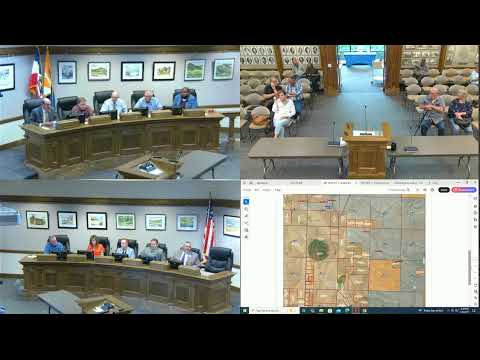
At a Sept. 3 Cedar City council work meeting, members revisited plans to drill a test well at the Braffitt 2.1 site after new concerns surfaced about potential impacts to adjacent surface-water rights.
Councilman Cox said he had learned of additional information that warranted further discussion before the council advanced drilling on either side of the site. Cox and other councilmembers raised the risk that drilling could affect surface flows and landowners’ senior water rights.
City staff explained how Utah’s water-rights process would apply. "All water in the state of Utah belongs to the state of Utah," Jonathan, a city staff member, said, describing the premise behind state water administration. He said protests typically are resolved by the state engineer’s office and that the engineer decides whether drilling impairs other users. "State engineers are third party. They're the ones that are going to determine whether it's impairment or not," he said, adding that appellants can later sue if they dispute the decision.
Staff and consultants described the practical sequence: municipalities commonly drill test wells before a protest period opens, and a formal protest period usually follows when the city files a change application to move rights into a well. A consultant referenced by staff estimated groundwater in the area could be roughly 100 feet deep and said that distance made surface/groundwater interference less likely in this case.
Council members also flagged financial and procedural risk. "There's additional financial risk — we might hit dirt," one councilmember said, noting early test wells can return unusable results. Staff noted previous local test wells had costs in the hundreds for initial tests and emphasized that drilling a test well does not commit the city to a finished production well.
The council did not take a binding vote to proceed to construction. Instead, members directed staff to continue negotiating access with landowners, prepare bids and, when formal contracts or bids are ready, return for an official vote. Several members emphasized that staff should provide a clearer legal and hydrological picture to assess potential protest and litigation risks before the city spends significant funds.
What’s next: Staff will continue to pursue land-access agreements and collect drilling bids. Any contract awards or decisions to move water rights into a drilled well will be brought back to the council for a formal vote.