Get Full Government Meeting Transcripts, Videos, & Alerts Forever!
Get email alerts on the Joint Fire Department topic
No spam. Unsubscribe anytime.
Wauwatosa committee reviews term sheet for proposed joint fire department with West Allis, defers formal vote
Summary
Wauwatosa’s Government Affairs Committee reviewed a draft term sheet to create a joint fire department with the City of West Allis, discussed legal structure, performance metrics, cost sharing and union issues, and asked staff to return in December with a revised term sheet and more contract detail. No vote was taken.
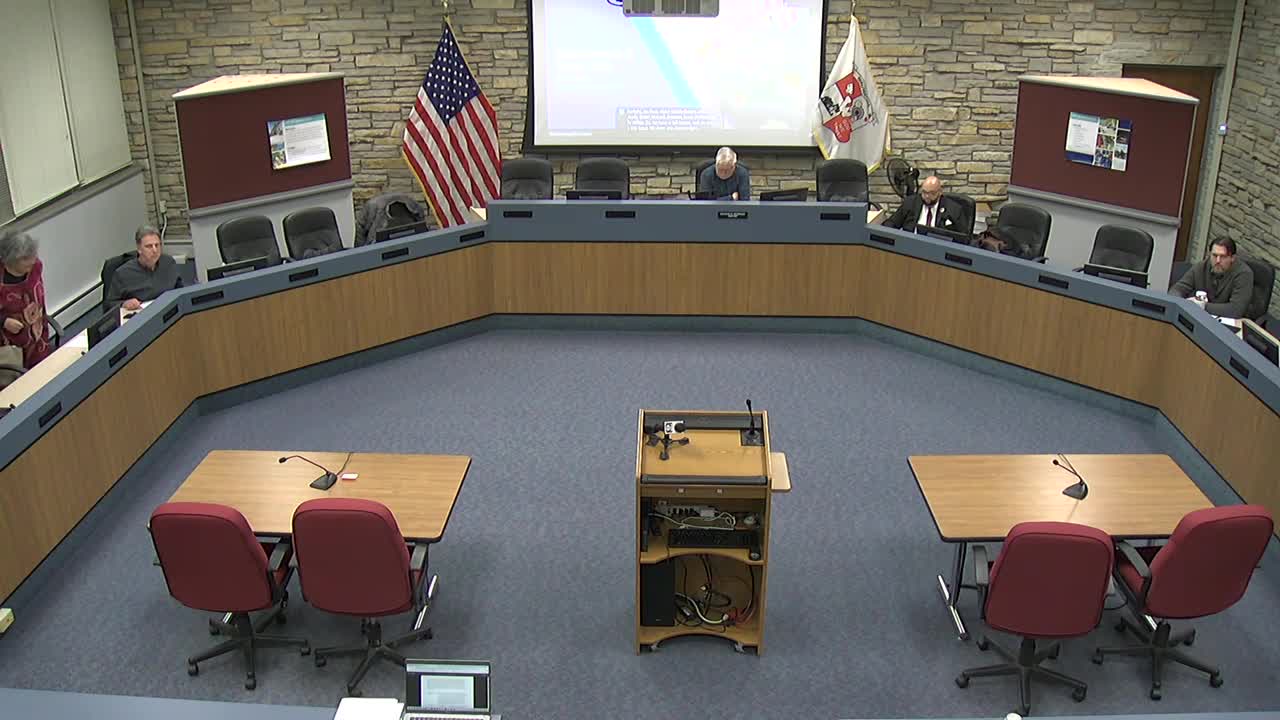
Wauwatosa — The Government Affairs Committee on Nov. 12 reviewed a draft executive summary and term sheet outlining the creation of a joint fire department to be formed by the cities of Wauwatosa and West Allis. City Administrator James Archambault told aldermen the document is iterative and staff are seeking committee feedback rather than a vote.
The item matters because a joint fire department could change how the cities levy property taxes and make them eligible for a new state “innovation grant” aimed at consolidating public‑safety services. Archambault and City Attorney Jennifer Tate said the proposed legal vehicle is a non‑stock corporation under Wisconsin Chapter 181, with intergovernmental service agreements and a separate board of directors proposed to include the mayor, council president and city administrator from each municipality.
At the meeting, Fire Chief Case outlined six initial performance measures staff will monitor monthly — including call‑processing time, total response time, fire‑spread containment, fire inspections, fire‑related deaths and workplace injuries — “so we can measure that” and ensure services stay the same or improve, he said. City Finance Director John Ugini described a color‑coded list of 11 financial and operational items that must be resolved before a final contract, and said Wauwatosa would initially provide financial oversight and payroll administration while West Allis completes a system upgrade.
Staff described the state innovation grant (cited in the packet as Wis. Stat. 79.038 sub. 1), which the packet lists as a $300 million program. The grant application deadline in staff materials was given as March 31, 2026; Tate and administrators said each municipality must apply separately and that, if awarded, payments could be made in up to five annual installments between July 1, 2025, and June 30, 2030. “If we don’t get the innovation grant we screwed up,” Ugini said, adding that the joint department could still proceed without grant funding but would face greater fiscal challenges.
Term and governance questions drew detailed discussion. The draft term sheet proposes an initial contract term of 10 years with automatic six‑year renewals and a two‑year without‑cause termination notice; staff said legal recourse for breach would be defined in the final contract. Committee members pushed back on the length, asking why the contract would start at 10 years when the grant requires only a three‑year minimum, and asked for clearer cost‑sharing mechanisms and protections if one city fails to receive grant funding.
Cost allocation and debt were prominent concerns. Staff proposed Wauwatosa provide finance services and suggested using a billing model that separates operating and capital charges; committee members discussed standard cost‑sharing formulas (one‑third population, one‑third calls for service, one‑third tax base) versus a flat 50/50 split. Staff warned retiree health liabilities, vehicle ownership and building ownership will require careful drafting: buildings may remain municipal property while vehicles could be owned by the joint department and replaced from a dedicated sinking fund.
Labor issues remain unresolved. Staff reiterated that formal collective‑bargaining negotiations cannot begin until a legal employer exists; union leaders from both municipalities have begun information‑sharing and meetings to identify priorities (schedules, health benefits, pension calculations), and staff said monthly joint labor‑management meetings are planned.
Committee members expressed mixed views but generally supported continuing work: Alderman Moldenhauer praised staff for the work and urged momentum; Alderman McClough welcomed more time and asked whether staff could include contingency language tied to the grant (attorney Tate said West Allis was unlikely to accept a contingent contract); Alderman Arnie urged inclusion of rank‑and‑file representation or a firefighter perspective on governing bodies. No members of the public spoke at the meeting.
Alderman McClure moved to hold the item for another month; a second was recorded but, after procedural clarification and discussion, the motion was withdrawn and committee members directed staff to continue refining the term sheet and return in December with as much contract language and detail as possible. There was no formal vote on approval.
Next steps: staff will continue the work plan led by subcommittees on finance, HR, operations, legal and dispatch; consultants will complete a dispatch study; administrators plan to meet with the Department of Revenue for clarifications about timing and what constitutes an "operational" joint entity for grant purposes. The committee expects to review a revised term sheet and additional contract detail at its December meetings.