
City approves two‑year contract with Las Vegas Police Protective Association costing about $3.0 million
Get AI-powered insights, summaries, and transcripts
Subscribe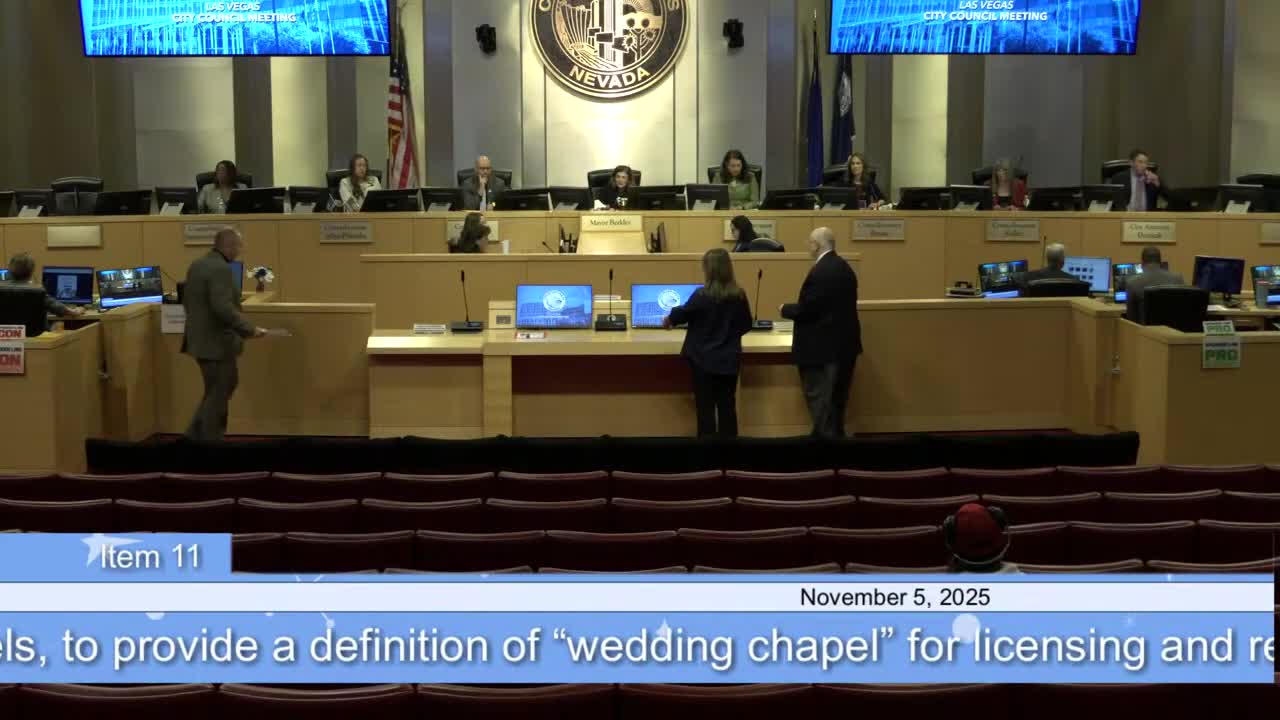
Summary
Council voted to approve a two‑year collective bargaining agreement with the Las Vegas Police Protective Association, effective July 1, 2025–June 30, 2027, with an estimated fiscal impact not to exceed $3,000,008.75. Key terms include a 4.2% effective increase in year one, partial merge of the two‑tier wage structure and K‑9 pay.
The Las Vegas City Council approved a two‑year agreement with the Las Vegas Police Protective Association (LVPPA) covering municipal marshals and court marshals, following a city presentation that summarized negotiations, voting by the union membership and the fiscal impact required to be entered in the record by the city manager under Nevada Revised Statutes.
City Manager Mike Jansen and Deputy HR Director Sue Brown presented highlights: the agreement runs from July 1, 2025, through June 30, 2027, with an estimated total fiscal impact of not more than $3,000,008.75. Year‑one compensation changes include a 2.6% COLA (aligned with CPI) plus a 1.6% salary increase (4.2% total). The contract phases a partial merge of a two‑tier wage structure (final merges and another $1,500 one‑time non‑pensionable payment for employees at the top of the range in year two), adds K‑9 pay, and keeps COLA tied to CPI in year two (floor 2%/ceiling 3%).
The LVPPA membership ratified the tentative agreement with high participation and approval rates reported by staff (90% voted; 86% in favor of the contract). The city presented minor non‑compensable language changes and a letter agreement to permit open, continuous recruitments for entry‑level and lateral hires to accelerate staffing. Councilmember comment praised marshals and moved to approve the agreement; the motion passed by voice vote.
Implementation: the city will manage payroll and benefit transitions (including moving medical coverage for PPA employees to Teamsters administration effective Jan. 1, 2026), process the one‑time cash payments, and track the fiscal impacts identified under NRS reporting requirements.