Jackson County weighs options after unbudgeted $97,000 solid-waste fee hit
Summary
County solid-waste director told commissioners a $6-per-ton state/local fee change could create a roughly $97,000 unbudgeted expense; staff proposed rate increases, alternative transfer stations, a county transfer station, or franchising commercial services to cover the shortfall.
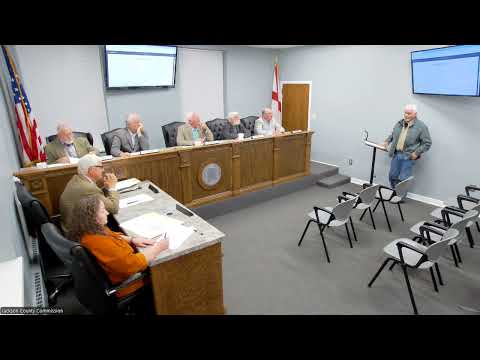
Jackson County officials on Oct. 27 debated how to cover an unexpected solid-waste cost that Director Schickler said would add about $6 per ton and produce roughly $97,000 in unbudgeted expenses if fully passed through in January.
"They're looking at $97,000 that we didn't budget for," Director Schickler said, summarizing the department's analysis of 2025 tonnage and pending tipping-fee changes. Schickler said the change results from a recent series of fee moves by neighboring landfills and municipalities and a new $1-per-ton state fee Scottsboro began passing to customers in August; another increase would push the county's exposure to roughly $6 per ton in January.
Schickler outlined four broad responses for commissioners to consider: absorb the cost temporarily; divert more loads to alternative transfer stations (Sylvania or a Sand Valley contract) to reduce per-ton expense; raise residential rates (a one-dollar monthly increase was presented as an example); or pursue longer-term investments such as building a county transfer station or franchising commercial front-load collection for new revenue.
He said shifting some loads to Sylvania would save about $36,000 annually under current arrangements but would still leave a gap. "Annual savings is about $36,000," Schickler said about increased use of the Sabangia/Sylvania option. By contrast, a transfer-station arrangement with Sand Valley could lower the county's per-ton cost enough to produce an estimated $140,000 in annual savings under one vendor's pricing, Schickler said.
Commissioners asked for clearer, apples-to-apples cost comparisons before choosing a path. Chair (Speaker 1) told staff to return in 30 days with detailed cost models for the options discussed, including: short-term rate scenarios (4% and 6% examples were discussed), anticipated savings from diversion, capital and operating costs of a transfer station, and potential revenue from franchising commercial services. Schickler flagged other operational changes as possible mitigation, such as returning to monthly billing to ease customer payment burdens and a new software system scheduled to go live in January.
Schickler also warned of supply and equipment costs: a new roll-off truck was priced at $249,000, and building a full landfill or major transfer station could cost multiple millions. He recommended commissioners weigh contracting for hauling versus investing in county-owned transfer infrastructure, noting the long-term liabilities of landfill ownership.
What's next: Commissioners asked staff to prepare detailed comparative cost analyses and rate-impact scenarios so the board can decide whether to implement a short-term rate increase, negotiate with neighboring facilities, create a transfer-station plan, or pursue franchise revenue to offset rising disposal costs.
AI generated
The text on this page is AI generated. Summaries, highlights, analysis, and video transcripts are all produced from the original source material.
AI can make mistakes, so if you spot one, and we will fix it for everyone.
Note: the source content is unaltered by us. Any content source we link to, be it a video, an audio recording, or a document, is presented exactly as its publisher released it. That publisher is usually a government body, sometimes an individual official or another organisation.