
Woodland keeps city tax rate flat, approves phased utility increases and pays down water loan
Get AI-powered insights, summaries, and transcripts
Subscribe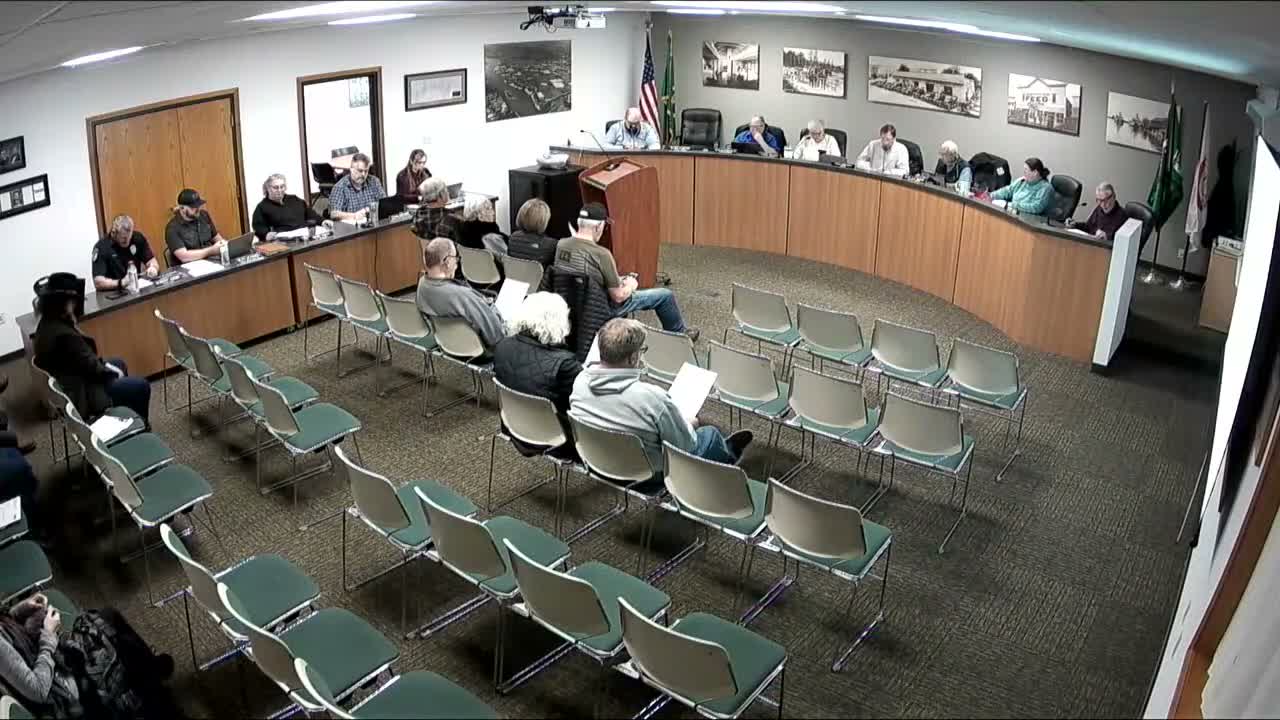
Summary
On Nov. 3, Woodland City Council voted to keep the city’s ad valorem tax rate at the prior-year level (Ordinance 1581, first reading), approved phased water/sewer/stormwater rate increases (13% in 2026 and 13% in 2027), and adopted resolutions to use investment and reserve funds to pay down or retire municipal loans for water filters 2 and 3.
Woodland City Council on Nov. 3 voted to keep the city portion of property taxes at the prior-year rate and to adopt a phased utility-rate schedule intended to build reserves for upcoming water-filter replacements and other capital needs.
Mayor (name not given) opened the meeting’s public hearing on Ordinance 1581 — described in the agenda as “fixing the amount to be provided by ad valorem taxes upon property in the City of Woodland in 2026” — and told residents the city’s proposal was to hold the city’s rate at 0% change from the prior year. “The budget delivers no tax increases,” the mayor said during the budget workshop that followed, stressing that school levies and county assessments are separate taxing districts and not controlled by the city.
Council moved and approved the first reading of Ordinance 1581. The first-reading action preserves the city’s current tax rate while the budget process continues.
At the same meeting council also adopted a schedule of utility rates for 2026–27. Finance staff proposed a phased approach — 13% in 2026 and 13% in 2027, then an ongoing 5.5% in subsequent years — intended to generate roughly $150,000–$200,000 annually in additional reserves to cover major capital work such as replacement of filters 2 and 3. Riley (finance staff) put the household impact in dollar terms: “The total dollar amount...from 2025 to 2026 would be $9.68 per month” for a household using 5 CCF, a figure council members used to illustrate the typical monthly change.
Council members discussed the rationale for the increases, including matching funds for grants and the aim of avoiding future large spikes. One councilor said the increased revenue is not intended to be a revenue windfall but to make the city eligible and competitive for grant funding and to build appropriate reserves.
To address outstanding loan terms for the water filters, council approved two related resolutions. Resolution 809 authorized use of funds from a recently matured municipal investment (about $800,000, as the mayor described) to pay down principal on the municipal loan for filters 2 and 3 and return to a term-compliant payment schedule. Resolution 810 authorized using water-utility reserves to pay off the loan for filters 2 and 3 entirely; council members noted this will reduce long-term interest payments and put the utility in compliance with city policy on debt and asset life (filters have a 15-year life; the loan term had been 20 years).
Why it matters: council framed these moves as fiscally conservative steps to avoid future tax increases and large borrowing costs. The ordinance and rate changes will be incorporated into the city’s 2026 budget and go back before council in future meetings for final adoption and implementation steps.
Votes at a glance: - Ordinance 1581 (first reading, set city ad valorem rate at 0%): motion passed on roll call. - Resolution 809 (use matured investment to pay down filter loan): motion passed on roll call. - Resolution 810 (use water-utility reserves to retire filter loan): motion passed on roll call. - Utility rates for 2026–27 (phased increases of 13%/13% then 5.5% ongoing): motion passed on roll call.
Next steps: council will finalize the 2026 budget in subsequent meetings and implement the adopted rate schedule in the utility billing cycle consistent with state requirements and the council’s schedule.