Get Full Government Meeting Transcripts, Videos, & Alerts Forever!
Get email alerts on the Transportation Maintenance Fee topic
No spam. Unsubscribe anytime.
Boulder council adopts Transportation Maintenance Fee after heated debate, 6–3
Summary
After hours of questions and public concern, Boulder City Council adopted Ordinance 8719 establishing a Transportation Maintenance Fee to fund pavement, bridges and safety assets. Council rejected a motion to postpone the ordinance and approved the fee 6–3; staff said the fee is budgeted at $2.25 million for 2026.
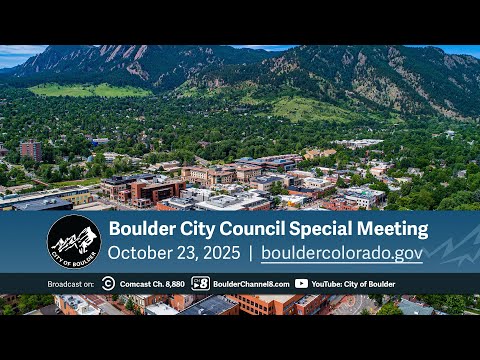
Boulder City Council on Oct. 23 adopted Ordinance 8719, creating a Transportation Maintenance Fee intended to generate revenue for pavement maintenance, bridge repairs, sidewalks, multi‑use paths and related safety work. The ordinance passed on a 6–3 roll call after council members debated whether to delay action for more community outreach.
Mayor Brockett and council members who supported the ordinance framed the vote as a step to protect the city’s pavement condition index and long‑term infrastructure health. "If we are able to fully fund our pavement management program at about $8 million a year, we're going to be able to maintain our current pavement condition," Deputy Director Valerie Watson said during the discussion, noting current pavement spending is roughly $5 million annually. Transportation staff told council that a full year of fee revenue could reach about $6.4 million, with roughly two‑thirds directed to pavement work and the balance to bridges, sidewalks, bus stops and safety assets.
Council Member Matt Benjamin, who introduced a motion to table the ordinance to Q1–Q2 2026 in order to expand outreach, said many businesses and residents told him the fee "is either a surprise to them or they recall it" only from prior engagement. Benjamin said he still supports the concept but wanted more front‑end public engagement before imposing the fee on businesses and residents. That motion to postpone was defeated on a roll call vote (the tabling motion failed 4–5), and council subsequently moved to adopt the ordinance.
Opponents emphasized concerns about timing, data freshness and equity. Council Member Lauren (last name as recorded) said "not everybody can follow the details of city processes," but warned that delaying could cause pavement condition to decline and raise future costs. Other members highlighted potential disproportionate effects on renters and small businesses and stressed that any modifications to fees may require revisiting the nexus study that supports the fee structure. City attorney and staff repeatedly noted that certain changes would trigger legal and budgetary implications tied to the nexus analysis and the appropriations already included in the 2026 budget.
The adoption vote was recorded with six yes votes (Council Members Shuhard, Spear, Benjamin, Mayor Brockett, Mayor Pro Tem Folkert and Marquis) and three no votes (Wallach, Weiner and Adams). Staff said fee collection would begin later in the year after an implementation phase; Charlotte Huskey, the budget officer, told council that the fee had been programmed into the 2026 budget at $2.25 million. "If we put it off, it would result in a significant delay in the design of the fee and the implementation of it when our transportation needs are so great," one supporter said.
Next steps: staff will proceed with implementation planning and community engagement on rollout mechanics (collection frequency, billing options, exemptions) as outlined in the council discussion. The ordinance authorizes the program; specific implementation details and any ordinance amendments arising from engagement would be presented to council later.