Get Full Government Meeting Transcripts, Videos, & Alerts Forever!
Get email alerts on the Municipal Budget topic
No spam. Unsubscribe anytime.
Greeley introduces 2026 budget with $21 million gap closed by carryover and transfers; second reading set for Oct. 21
Summary
Budget director presented the 2026 proposed budget projecting $483.5 million in revenues and $507.4 million in appropriations, noting a roughly $21 million gap to be closed using 2024 carryover, $3 million in departmental savings and a $7 million capital‑fund transfer; council scheduled final adoption for Oct. 21.
Greeley — City staff introduced the proposed 2026 budget on Oct. 7, outlining revenue, expenditure and policy tradeoffs as council prepared for a second reading and adoption scheduled for Oct. 21.
Budget Director Nathan Moseley told council the recommended budget projects $483.5 million in total revenues across all funds and $507.4 million in total appropriations, leaving an approximate $21 million gap. Staff proposed closing that gap by using unspent carryover from 2024, identifying $3 million in departmental savings and transferring $7 million from capital funds; Moseley said the plan avoids tapping revenue stabilization reserves.
The proposed budget includes a capital program just over $65 million, continued utility enterprise spending of roughly $186.7 million, and policy choices that include the extension of 54 term‑limited positions focused on continuity of service. Departmental additions include several positions funded by utility and transit funds. Moseley said staff will return on Oct. 21 for the second reading and adoption and for final appropriations related to FY2025 carryforwards and the 2026 pay plan.
Barry Eastman, chair of the Citizen Budget Advisory Committee, said the committee reviewed the proposal and recommended no changes but urged council to prioritize a plan to close the structural gap for 2027 and to avoid relying on new taxes.
Council members probed a range of issues: the PMO/CIP visibility and the need for clearer KPIs for project delivery; vacancy and supplies/services trends; whether public‑safety funding (including possible use of a public‑safety tax) should be pursued; and requests to prioritize three additional firefighters (council estimated net cost around $557,241.36 for 2026) to meet staffing relief needs for a new rescue truck. Staff said the homeless shelter operating cost in 2026 is estimated at about $1.8 million annually, of which roughly $1.2 million (about 70 percent) would be borne by the city and the remainder by grants and partner contributions.
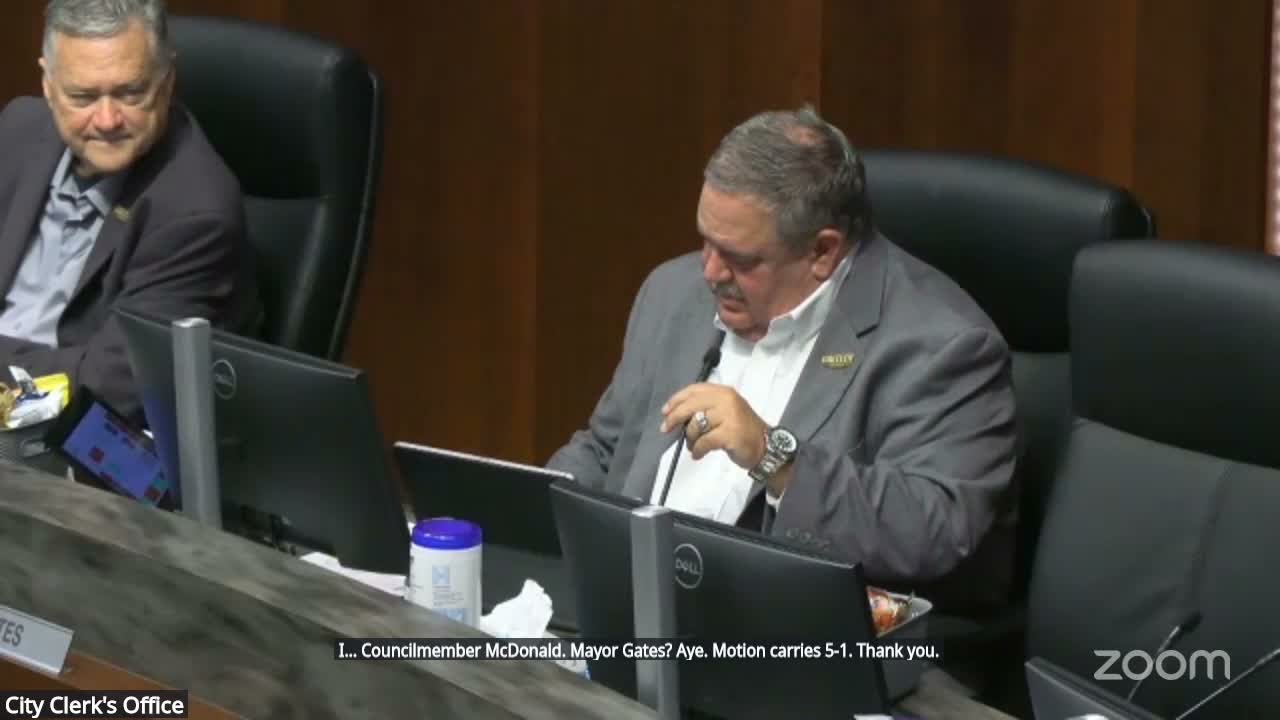
Council voted 6–0 to introduce the ordinance and schedule the Oct. 21 second reading and public hearing.
What happens next: Council will receive the second reading and public hearing on Oct. 21, at which point it may adopt the 2026 budget and consider any last‑minute appropriations or amendments.