Get Full Government Meeting Transcripts, Videos, & Alerts Forever!
Get email alerts on the Code Enforcement topic
No spam. Unsubscribe anytime.
Sebring council authorizes lien‑clearing contract to address chronic blight
Summary
The City Council authorized the city to retain Widener Law Firm for a contingency-based lien‑clearing and foreclosure program aimed at collecting long‑unpaid code‑enforcement fines, pursuing auctions of abandoned properties and encouraging voluntary compliance.
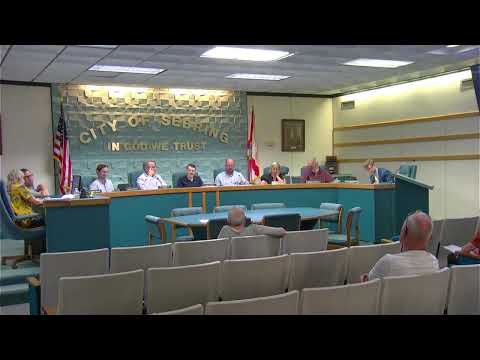
The Sebring City Council voted Oct. 7 to hire Widener Law Firm to pursue lien‑clearing and foreclosure actions against property owners who have accumulated long‑standing code‑enforcement liens.
Attorney Matt Widener outlined the program to the council, describing a “comply, collect and close” approach under which his firm fronts title searches, private investigators and filing fees, then moves cases to judicial foreclosure and public auction when owners are nonresponsive. Widener told the council the statutory process permits foreclosure actions as early as three months after liens are imposed, but municipalities commonly set higher local thresholds; the firm typically seeks cases with long unpaid balances or clear noncompliance.
Widener said the firm operates on a contingency basis and recovers between 20% and 40% of net recovery when matters go through appeals, and that the city incurs no up‑front legal costs under the proposed arrangement. He described examples from other Florida cities in which properties with persistent liens were returned to productive use after auction or sale to new owners.
Council members asked how the firm selects cases, whether homestead properties would be treated differently, and how outstanding mortgages or IRS liens would affect recoveries. Widener said selection is policy‑driven (the city can set dollar thresholds or prioritize dangerous structures), that homesteaded properties receive sensitivity and mitigation options, and that superior liens such as mortgages do not prevent enforcement but may affect the ultimate recovery.
Members of the public urged sensitivity for owners with mental‑health or financial problems and asked about addressing visible debris on private lots. Widener and city staff said the program can be paired with an “angel fund” or settlement process to help owners bring properties into compliance where appropriate.
After discussion, a council member moved and the council voted to direct staff to retain Widener Law Firm under a contingency contract to pursue lien‑clearing for qualifying properties. Council direction emphasized case selection, continued owner outreach, and sensitivity for hard‑luck circumstances.
The council will receive contract terms and return to the city commission for any necessary final approvals before cases are filed.