Get Full Government Meeting Transcripts, Videos, & Alerts Forever!
Get email alerts on the Land Use topic
No spam. Unsubscribe anytime.
The Colony updates zoning language to align mobile food rules with new state law
Summary
The Colony City Council adopted amendments to Appendix A of the municipal code to replace ‘mobile food vendor’ with ‘mobile food units’ and align local land-use text with House Bill 2844 and Texas Food Establishment Rules; the Planning Commission had recommended the change 5–0 and no public opposition was recorded.
The Colony City Council on Oct. 6 adopted amendments to Appendix A of the city code that replace the term “mobile food vendor” with “mobile food units” and update related definitions to match language in chapter 6 and the Texas Food Establishment Rules.
City planner Isaac Williams told the council the changes are primarily a terminology cleanup intended to unify definitions across the zoning code and the health/building chapter after the state enacted House Bill 2844. Williams said the bulk of operational regulations remain in chapter 6 and that appendix language was updated to tie land‑use references to state definitions.
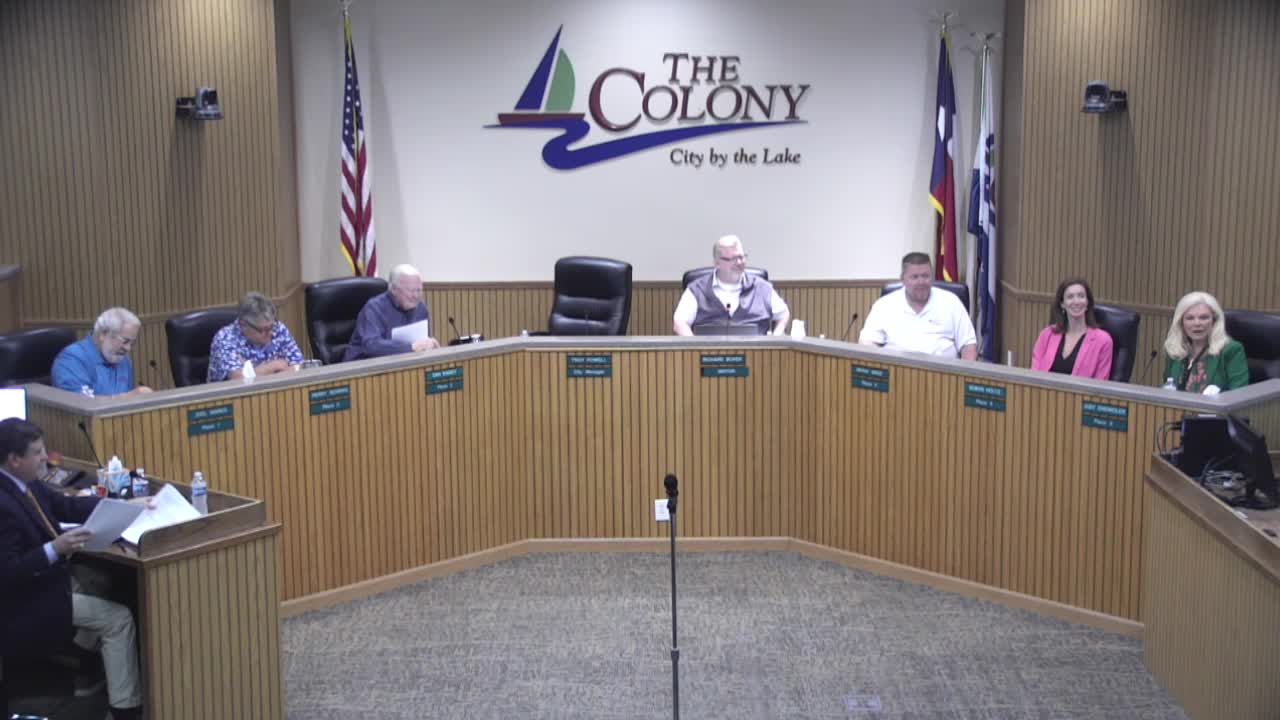
Mayor Richard Boyer opened and closed the public hearing after no members of the public stepped forward. Williams noted the Planning Commission considered the amendments on Sept. 23 and recommended approval by a 5–0 vote.
Several council members discussed the broader policy context, saying HB 2844 preempts some city authority over mobile food operations and shifts licensing considerations to the state. One council member said the state’s stated rationale was to avoid multiple city licensing requirements for vendors that operate in several jurisdictions.
Motion to approve the ordinance was made and seconded; the council voted to adopt the amendments. The change standardizes local terminology with the state rules but does not by itself add new operational restrictions beyond those already set in chapter 6.
Next steps: staff will ensure chapter 6 and related permitting materials reflect the updated terminology and advise vendors on any changes to the application process.