Get Full Government Meeting Transcripts, Videos, & Alerts Forever!
Get email alerts on the Cannabis Payment Reform topic
No spam. Unsubscribe anytime.
Committee hears bill to require payment-on-delivery for cannabis; industry urges export options to relieve oversupply
Summary
Chair Aragona’s bill would require payment when product moves between licensed cannabis businesses; industry witnesses (Objective, Loom) urged EFT within one business day, a defined return window, penalties for noncompliance and proposed allowing exports of federally compliant THC to reduce oversupply.
The House Regulatory Reform Committee on July 29 heard sponsor Chair Aragona’s bill requiring payment on delivery across licensed cannabis supply-chain actors and received industry testimony urging electronic funds transfer and broader regulatory changes.
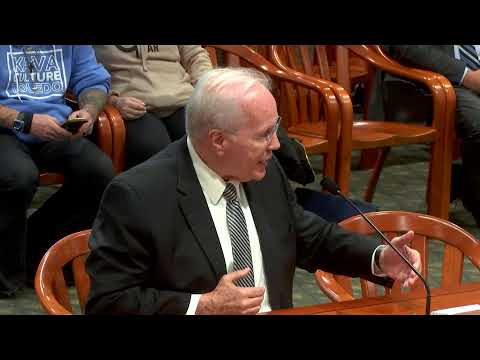
Chair Aragona, the bill’s sponsor, described the proposal as modeled on liquor industry practice: "when marijuana moves ... payment is then immediately required," he said, adding the change would improve fairness and clarity in a heavily regulated market. The core requirement would be EFT at delivery across growers, processors and retailers.
Clark Worthwine, co‑owner of Objective and a vertically integrated licensee in southeast Michigan, testified in support. Worthwine recommended "EFT within one business day of delivery" paired with a short, clearly defined return window and "swift, meaningful penalties for unlawful, unlicensed, or noncompliant behavior." He told the committee that cash and informal check practices create laundering, counterfeit bills and nonpayment disputes and that many suppliers currently lack a reliable way to force payment.
Loom Cannabis representatives told the committee that payment-on-delivery and a proposed new wholesale tax together could deepen an existing oversupply problem. A Loom speaker said Michigan has "about a million pounds of oversupply" and argued that forcing on‑demand payment and adding wholesale taxes could put many smaller licensees under severe financial pressure. Loom urged the committee to consider allowing licensed Michigan producers to export federally compliant THC (which the witnesses said is defined by the federal Farm Bill as 0.3% THC by dry weight) so the state industry can access larger markets.
Committee members pressed witnesses on several points: Representative Tisdell asked whether the bill would address federal banking constraints and whether downstream retailers have access to the same lines of credit used in the liquor trade. Witnesses acknowledged some retailers may lack traditional credit access and said EFT would reduce disputes and induce more sustainable purchasing. Loom’s witnesses also cautioned that export policies would need careful regulatory design to avoid importing untaxed or untested products and to preserve Michigan testing standards for beverages and other formats.
No formal amendments were offered during the hearing. The committee took no final vote on the sponsor’s bill at this meeting; the matter remains under committee consideration.