Get Full Government Meeting Transcripts, Videos, & Alerts Forever!
Get email alerts on the Land Use topic
No spam. Unsubscribe anytime.
Cedar Hill council approves 84-home planned development after residents press traffic, wildlife and construction concerns
Summary
After more than an hour of public comments raising traffic, safety and wildlife concerns, the Cedar Hill City Council approved PD6822024 to allow an 84-home planned development; council members said the PD offers more design controls than building under existing zoning and pledged staff follow-up on mitigation.
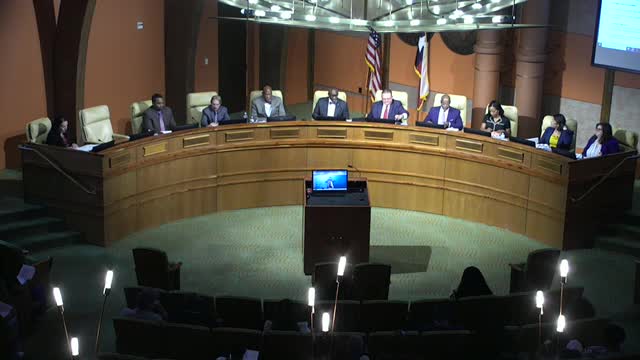
The Cedar Hill City Council voted Aug. 12 to approve a zoning change to a Planned Development (PD6822024) that will allow an 84-home single-family subdivision on property off East Pleasant Run Road. The vote followed extensive public comment from neighbors who warned the project could worsen traffic, endanger children and displace wildlife.
Residents who live in Meadow Vista, Wooded Creek and surrounding streets urged the council to require a different construction and access plan. "We don't need the extra traffic," Theresa Robertson said, asking the council to consider access from a service road or Trinity Church parking rather than routing vehicles through interior neighborhood streets. William Hannah said the site is largely woods and "I consider it a negative for the already established Meadow Vista homeowners." Several speakers said school pickup hours and existing parking on narrow streets would make additional traffic particularly hazardous.
Developer representative Kofi Adoo of Winkelman and Associates told the council the 84 homes are intended to be consistent with neighboring lot sizes and that many units will have rear-entry or "j-swing" garages. He said the plan includes sidewalks, trail connections and preservation of a triangular easement area to avoid building on part of the site.
Council members emphasized the limits of local authority and why the PD was presented as the better regulatory option. Councilwoman Miranda Azzin (stating she lives on Wooded Creek) explained the city asked for a traffic study and that the PD gives the city tools it lacks under by-right SF-10 zoning: "We get the ability to add many more restrictions on." Planning staff confirmed the property is currently zoned SF-10 (10,000-square-foot lots) and that, without PD approval, the owner could develop under the existing standards.
The council and staff also cited nonnegotiable requirements that shape the outcome regardless of zoning: the fire code requires two points of ingress and egress for developments over 30 lots, and the city's thoroughfare plan adopted in 2022 shows the collector connection in that corridor. Staff told the council they had commissioned a traffic-impact analysis (a roughly 27-page report) before the Aug. 12 hearing and said its findings were broadly consistent with prior data.
Multiple council members pressed the developer for commitments on construction routing, staging and mitigation. "We always work with cities...so whatever we heard today, we'll take care of it," Adoo told the council. Council members said they would ask staff to compile a documented list of resident concerns and to pursue feasible measures — including construction route restrictions, staging areas and monitoring — that could reduce neighborhood impacts.
Council Member Hayden moved to approve PD6822024; Council Member Sims seconded. The motion passed with council support; the council directed staff to continue working with the developer on mitigation measures and to monitor traffic and construction impacts during buildout.
Next steps: the developer said build-out could take roughly two to three years, depending on market conditions. Council members said some mitigation — for example, traffic-signal installation or county road widening — would require data-driven processes or external funding and may occur on a longer timeline.