
Board approves two-year fire-inspection contracts after discussion on shared funding
Get AI-powered insights, summaries, and transcripts
Subscribe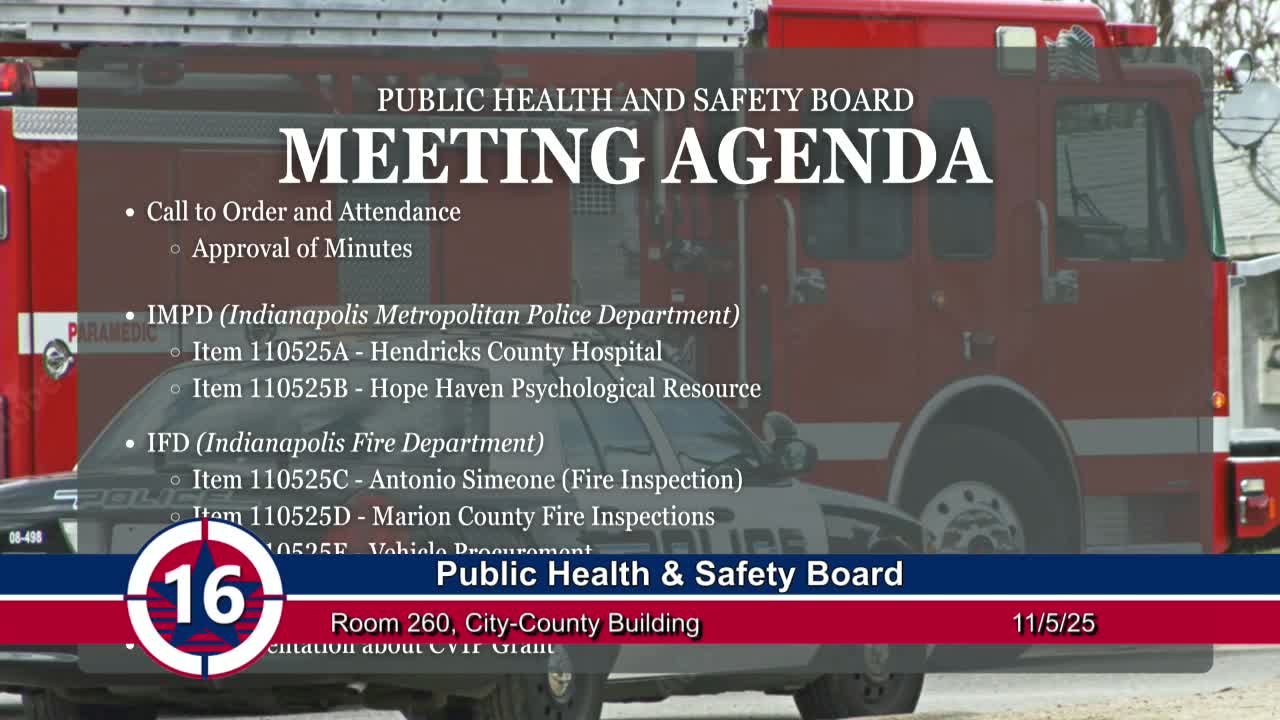
Summary
The board approved two inspection contracts (Antonio Simeone and a Marion-County vendor) that will share a funding pool to allow flexibility in assigning low-risk occupancy inspections; staff said each contract has memo NTEs of $765,000 and historical billing has been well under that figure.
The Public Health and Safety Board voted to approve two two-year contracts that expand private-sector fire inspections for low-risk occupancies across Indianapolis.
Kennedy, the fire department contract manager, told the board the city has about 31,000 inspectable occupancies and the department uses a risk matrix (high, medium, low) to triage inspections. "We have 10 deputy fire marshals — no way we can get 31,000 done in a year," the presenter said, noting private vendors handle most low-risk and some moderate inspections.
Staff asked for a shared pool of funds rather than strictly separate NTEs to allow the department to reassign inspection districts depending on staffing. A board member said this practice raises fairness and procurement-clarity concerns: "It does allude to the fact of being $1,530,000" if combined, the member said, referring to how two contracts each listing $765,000 could be read together.
Legal counsel clarified the memos presented to the board each stipulate a separate not-to-exceed amount of $765,000; staff said purchase orders are issued annually to set realistic yearly spending expectations and historically vendors bill well under the contract ceilings. Staff described a five-year pilot of the vendor program; vendors have performed roughly 7,000–10,000 inspections per year under the arrangement and the NTE provides a cushion for year-to-year variability.
The board took the two items together and voted to approve them. The transcript records the motion as passed without a roll-call tally.