Fort Smith moves to obligate bulk of $100 million bond for consent‑decree sewer repairs amid questions over high bids
Loading...
Summary
Following a bond closing, the Fort Smith board approved many contracts to begin consent‑decree wastewater repairs but tabled several large projects after engineers and former officials flagged bids that far exceeded engineering estimates.
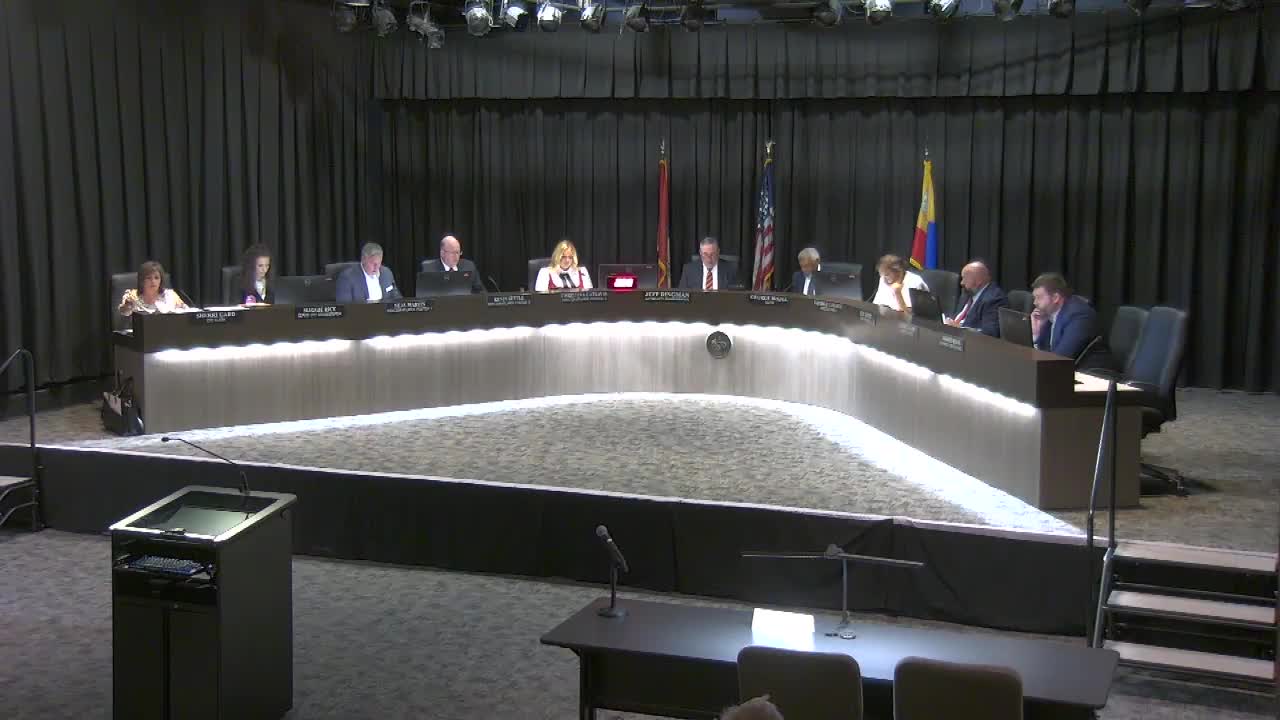
The Fort Smith Board of Directors on Nov. 4 moved to obligate the majority of a $100 million bond issue to long‑running consent‑decree sewer repairs while flagging procurement concerns on several large contracts.
Administration told the board the city closed on $100,007,564 in sales and use tax bonds and proposed an initial package of nine construction projects and multiple engineering contracts to begin the work funded by the bonds. Staff said the items presented that night would obligate just over $77 million and that additional design contracts to obligate the remaining $23 million would follow.
Several contracts were approved by roll call, including a $5,316,733 construction contract with Inliner Solutions LLC for 13,816 linear feet of sanitary sewer and a $9,096,780.50 contract with Krafft Reynolds for 17,950 linear feet and 160 manholes. City engineer and staff explained project scopes and schedules; many items included construction-observation contracts with engineering firms.
Former director and resident Levon Morton urged caution on bundling many projects in one meeting and highlighted large variances between bids and the engineering estimates on two projects (one roughly $6 million and another about $4 million above estimates). He asked that the engineering firm explain why estimates were off and questioned whether the same firm should be selected to provide construction observation for projects where the estimate missed by that margin.
An engineer from Hawkins Weir, Larry Yancey, told the board that late-in-the-cycle, out-of-state bidders and local contractor capacity constraints contributed to higher bid prices on some projects, and that the city’s historical pricing methodology used normalized costs per cubic yard and had been consistent with other projects. Staff also noted bids are typically valid for 60 days and discussed the tradeoffs of wider bid windows.
Directors asked staff to provide written explanations and to consider splitting very large contracts into smaller pieces to encourage more local bidding and competition. The board tabled several items with large bid variances (items 6, 7, 12 and 13 were among those directed to a study session) while approving other contracts to keep construction moving. Several directors also urged monthly public updates and a clear visual progress map on the city's website to show linear feet and manholes completed toward consent‑decree milestones.
The approvals and the tablings mean the city will begin moving bond funds into construction contracts but will hold off on awarding several large packages until staff and engineers provide further justification for the cost differences.