Get Full Government Meeting Transcripts, Videos, & Alerts Forever!
Get email alerts on the Parks Policy topic
No spam. Unsubscribe anytime.
Milwaukie staff proposes framework for public‑private partnerships in parks; council favors short‑term flexibility
Summary
City staff presented four categories of public‑private partnerships for parks and asked council for feedback; councilors supported using temporary permits and simplifying interim processes while a formal green‑space management plan is developed in 2026.
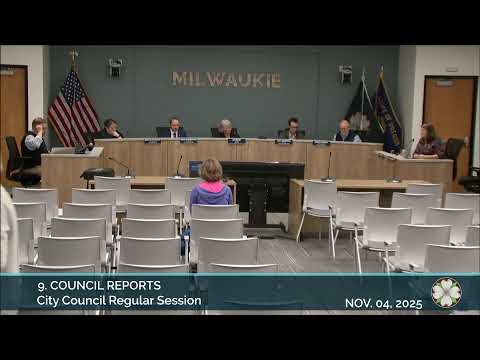
City staff described a framework for public–private partnerships in Milwaukie parks at the Nov. 4 council meeting and sought council feedback on balancing public benefit, environmental protection and equitable access.
Public Works Director Peter Passarelli introduced the topic and Parks and Green Space Development Manager Adam Moore outlined four partnership types: program‑based partnerships, capital improvements, operations & maintenance (O&M) partnerships, and revenue‑generating arrangements. Moore said the Parks & Recreation Board recommended a transparent solicitation process tied to publicly adopted goals, protective limits for sensitive natural resources, and case‑by‑case evaluation of proposals.
Councilors expressed caution about permitting permanent commercial installations before the city adopts a green space management plan. Several members advocated for a simpler interim pathway so small businesses and community groups can propose short‑term activations without navigating a burdensome request‑for‑proposals process. Councilors and staff agreed the planned green space management plan is on the council’s goal timeline for 2026; until then, staff will rely on the city’s temporary event or special‑use permit process for short‑term programming and will bring proposals that raise red flags back to the council for policy direction.
Members of the public urged the city to streamline options for community contributions that are not revenue‑driven, such as permanent raised garden beds or nonprofit programming, while keeping safeguards to protect open space. Adam Moore and City Manager Emma said staff will develop the scope of work for the green space management plan and incorporate council feedback about equity, transparency and simplicity for interim proposals.
What changed: No ordinance or permanent policy was adopted at the Nov. 4 meeting. Council signaled a preference for refining existing temporary permit pathways, developing the green space management plan in 2026, and considering a lightweight, rolling intake or short‑form application for community or small‑business proposals in the interim.