Get Full Government Meeting Transcripts, Videos, & Alerts Forever!
Get email alerts on the Land Use topic
No spam. Unsubscribe anytime.
Beaumont council resumes debate over digital billboards; no decision reached
Summary
Planning staff presented options for billboard code changes — overlay zones for strategic electronic signs, status quo, or staff-directed ordinance drafting — and council engaged in a lengthy debate over swap ratios, visual impacts, property-owner rights and review authority; council gave staff feedback but did not adopt a policy.
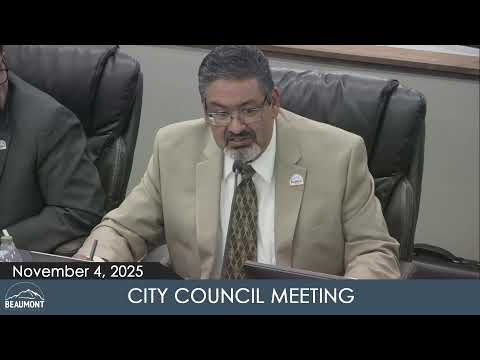
Beaumont — The City Council dug into a lengthy planning discussion on Nov. 4 about possible revisions to Beaumont’s Municipal Code governing billboards and electronic message signs. Staff presented three options: establish overlay zones to permit electronic billboards in select freeway‑adjacent locations, retain the status quo (owner must replace existing signs on a 1‑for‑1 basis), or direct staff to draft a tailored ordinance reflecting community priorities.
Planning staff presented mapping and a proposed 4‑for‑1 swap ratio (remove four static faces for one new electronic face), and proposed a 1,000‑foot buffer between electronic structures. Council members and staff debated alternatives, including a 2‑for‑1 swap or discretionary review by planning or council as conditional use. Concerns included visual saturation along Interstate‑10 corridors, proximity to residential areas, who owns existing billboards (staff noted a concentration owned by a national company), the legal status of existing signs (permitted vs. nonconforming), and the city’s ability to require removal on redevelopment. Several council members favored retaining council or planning discretion for electronic sign approvals rather than a one‑size‑fits‑all ratio; others sought more targeted overlays for heavily concentrated areas (Pennsylvania/Highland Springs corridor).
No ordinance or numeric standard was adopted; staff said they would return with options reflecting council input, possible overlays for specific corridors, and analysis of ownership and permitting status for existing signs. Council members asked staff to develop guiding principles and written criteria to reduce uncertainty for prospective sign developers.