Get Full Government Meeting Transcripts, Videos, & Alerts Forever!
Get email alerts on the Opioid Settlement topic
No spam. Unsubscribe anytime.
Opioid settlement coordinator reports naloxone distribution and recovery supports expansion
Summary
County opioid-settlement staff said they distributed more than 1,000 naloxone kits, trained school personnel in naloxone administration, sustained a recovery court for 15 participants and advanced three provider-led strategies drawing down startup funds.
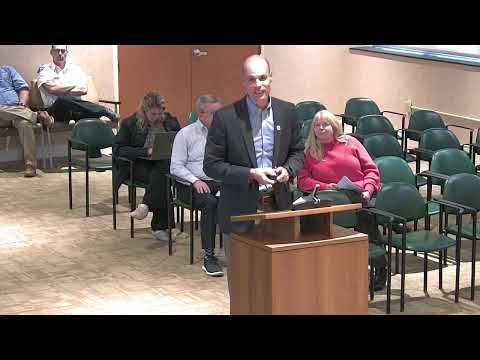
Burke County’s opioid-settlement coordinator presented an update Nov. 3 on programs funded by settlement dollars, saying the county has distributed over 1,000 naloxone kits, trained school personnel to administer naloxone, launched a peer-support coalition and sustained an expanded recovery court.
Coordinator 'Katie' said the county established an independent opioid-settlement department and executed provider strategies that include SPARK (family-centered treatment), a caring alternative for recovery housing and a Low-Barrier MAT program provided by High Country Community Health. The coordinator reported outcome metrics for the recovery court: 15 participants served, nearly 1,600 staff contacts, 100% linkage to treatment and harm reduction services, 80% adherence to treatment at six months and 73% housing/employment retention for participants.
Operational advances: Staff identified a lower-cost naloxone supplier that reduces per‑kit cost from about $38 to $22, enabling the program to stretch funds further. The county has filled community navigator and post‑overdose response team positions with start dates in mid-November.
Next steps: The opioid advisory committee will meet Nov. 18 to review three provider proposals (Burke Recovery, Scribe‑Centered Recovery Program, Catawba Valley Healthcare) and consider reactivation of some resolutions or additional port-team funding. Staff said further impact reporting will follow as programs scale.