Get Full Government Meeting Transcripts, Videos, & Alerts Forever!
Get email alerts on the Public Health Addiction topic
No spam. Unsubscribe anytime.
Burke County reports naloxone distribution, recovery-court success and new hires funded by opioid settlement
Summary
County opioid settlement coordinator reported distribution of more than 1,000 naloxone kits, a recovery court serving 15 participants with strong treatment linkage, provider-led start-ups drawing initial funds, and hires for a community navigator and co-responder positions beginning in November.
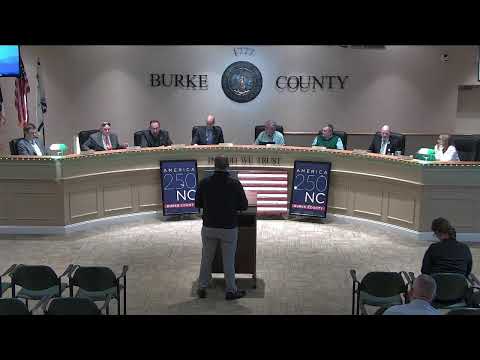
Burke County’s opioid-settlement program leaders told commissioners Nov. 3 they have distributed more than 1,000 naloxone kits, launched countywide education and engagement, and sustained an expanded Burke County Recovery Court that linked every participant to treatment and recovery services.
Katie, the county’s opioid-settlement coordinator, said program strategies in fiscal year 2024–25 included staffing the opioid settlement coordinator position, launching a peer-support coalition, conducting a videography project documenting lived experience, and sustaining three provider-led strategies—family-centered treatment (FCTR), recovery housing, and low-barrier medication-assisted treatment through a local clinic.
On recovery court outcomes, she reported 15 participants served last year with almost 1,600 staff contacts; 100% were linked to treatment and harm-reduction services, 80% were adhering to treatment at six months, 73% showed housing and employment retention, and 100% received naloxone kits.
Katie said the county recently found a lower-cost naloxone supplier, reducing per-kit cost from about $38 to $22, which she said will extend program funds. She reported the county has made an offer for a community navigator to start Nov. 10 and has two offers for co-responder positions starting Nov. 17.
Program leaders said provider-led strategies have drawn down startup funds and that the opioid advisory committee will meet Nov. 18 to review three provider proposals (Burke Recovery, Christ Centered Recovery Program, and Catawba Valley Healthcare) for clinical assessment, recovery housing and reentry services, respectively.
Katie emphasized involving people with lived experience in planning: of roughly 315 unique participants in planning activities last year, 34% reported lived experience of mental health or substance use issues; in the Citizens Academy sample, 90% reported lived experience. "The biggest barrier they said was access to care followed by stigma and judgment," she said, and added that the top local priorities recommended were treatment and harm reduction.
What’s next: Advisory committee recommendations following the Nov. 18 meeting will be forwarded to the board for consideration; staff will report further impact metrics at future meetings.