Get Full Government Meeting Transcripts, Videos, & Alerts Forever!
Get email alerts on the Disaster Recovery topic
No spam. Unsubscribe anytime.
Burke County manager outlines slow, contested FEMA reimbursement process after Helene
Summary
County Manager Brian Mandur told commissioners the county’s $11 million debris and recovery application has been slowed by repeated FEMA reviews, a dispute over monitoring-company load measurements affecting about 43% of invoices, and the transfer of operations to the state’s NC SMART program.
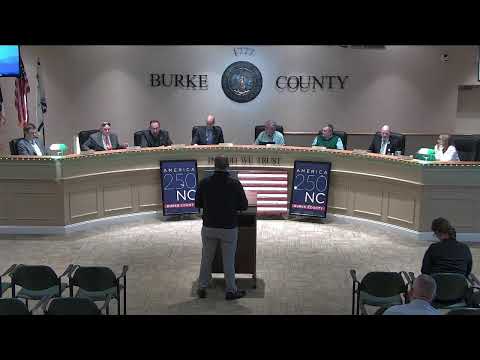
County Manager Brian Mandur gave commissioners a detailed update Nov. 3 on the county’s FEMA public-assistance application tied to Hurricane Helene, saying progress has been “rigorous” and slower than expected while the county pursues reimbursement for debris-removal and emergency operations costs.
Mandur said Burke County originally filed an application across five FEMA categories but removed one category after insurance reimbursed building improvements. He said the county has paid roughly $11 million to contractors for debris collection and monitoring and has so far received a small portion of the total obligation, reporting “we've received $12,000 today” toward an $11,400,000 request.
The manager described the multi-step FEMA review—including local project managers (PDMGs), a project disaster team leader, and a large-project review in Washington D.C.—and said the federal review standards and documentation requirements (a voluminous FEMA public-assistance doctrine) have been updated multiple times during the 14-month process. Mandur said the county reached the large-project review but was sent back after questions arose about monitoring-company reports.
A central dispute involves how a licensed monitoring company, DebrisTech, calculated trailer volumes at alternative debris sites. Mandur said FEMA questioned entries where monitoring reports indicated trailers were 90% full; FEMA reviewers contend trailers could reasonably only be about 83–85% full. "So when these contractors were taking the material to these alternative debris sites... they would pull under DebrisTech... and they had a scanning technology that would give the volume of material," Mandur said. He added the disagreement affects roughly 43% of the county’s invoiced loads and could reduce reimbursements by several hundred thousand dollars if not resolved.
Mandur said the county has engaged the monitoring company’s attorneys and is pursuing administrative remedy and negotiation with FEMA. He also described the county’s decision in late May to join the NC SMART program—transferring operational responsibility to the state and keeping the same contractors—to reduce local financial and legal exposure during expanded debris-collection operations.
Mandur told the board the county’s application moved through several FEMA review lenses—including legal, archaeological and financial reviews—and that after large-project review the county expected FEMA obligation and disbursement to the state. "Anything over a million dollars... sent it to Washington DC where this large project review is," he said, noting that the county was the first in the region to reach that review level and that the process had involved disputes over minutes of generator operation, definitions of brush and pile removal, and technical measures used to calculate volumes.
Commissioners asked whether the county’s cash-on-hand and investment returns would be affected by spending $11 million before reimbursement arrived. Mandur said reduced cash balances limit investment returns but declined to quantify loss precisely, saying it would not be “hundreds of thousands” in his view but would have some measurable effect. He recommended the board allow legal and technical discussions to continue with DebrisTech and FEMA, and he expressed confidence the county will ultimately secure a greater portion of the requested obligation.
What’s next: Mandur said staff will continue to work with FEMA, the state, and the monitoring company’s legal counsel to push the package back through large-project review toward obligation and disbursement. He asked commissioners to remain patient as the county pursues administrative remedies and further documentation.