Get Full Government Meeting Transcripts, Videos, & Alerts Forever!
Get email alerts on the Land Use Rezoning topic
No spam. Unsubscribe anytime.
Developer seeks rezoning behind First Baptist Church to build townhouses; public hearing left open
Summary
Larson Engineering presented two applications to amend Georgetown's comprehensive plan and rezone rear parcels behind First Baptist Church and adjacent property to MR-2 (townhouse) to enable roughly 110–120 units; the council left the public hearing open for two weeks for written comments and later readings.
Doug Liberman of Larson Engineering, representing developer Bill Davison and First Baptist Church of Georgetown, told the council the applicant seeks a comprehensive-plan amendment and rezoning to change a rear portion of a church parcel from commercial/highway commercial to MR-2 townhouse residential while keeping the church and frontage as a separate commercial lot. "We're here seeking final amendment to the comprehensive plan to correct future land use for a portion of the property from commercial to multifamily residential," Liberman said during the Oct. 13 public hearing.
Liberman said the rezoning corrects a drafting error in earlier submissions, that the Office of State Planning issued a letter of no objection, and that the development concept would subdivide the rear portion for townhouses while retaining the church and parking on the frontage. He estimated a concept density of around 110–120 units but said stormwater and detailed site engineering remain to be completed and that a final price range is "not known"; he characterized the plan as providing "sorely needed affordable housing."
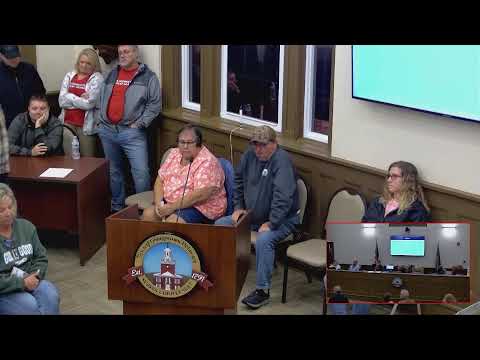
Council members asked clarifying questions about location and timing; town staff pointed out the proposal aligns with comprehensive-plan language promoting medium-density residential (MR-2) on larger undeveloped parcels. The chair said the public hearing will remain open for two weeks, then return for first reading and approximately two weeks later for a second reading and potential vote. Members of the public attending the hearing raised questions later in the meeting about other small-house developments and accessibility concerns for proposed units.
Next steps: the council left the hearing open for written comments and scheduled the item for first reading at a future meeting. No formal vote on the rezoning occurred on Oct. 13.