Get Full Government Meeting Transcripts, Videos, & Alerts Forever!
Get email alerts on the Recreational Immunity topic
No spam. Unsubscribe anytime.
City attorney outlines recreational‑immunity limits after May drowning at River Life pier
Summary
City attorney briefed the Parks Committee on Wisconsin's recreational and governmental immunity after a May 11 drowning; while discretionary signage and equipment placement is generally protected, negligent maintenance or malicious failure to warn can create liability.
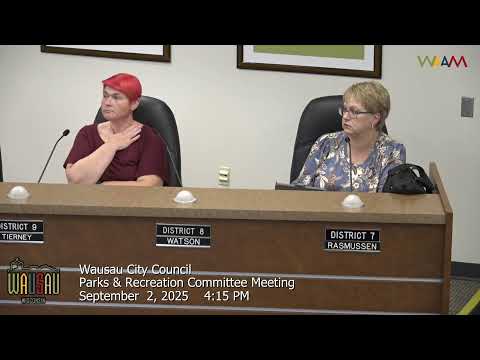
The City of Wausau’s city attorney briefed Parks and Recreation Committee members Sept. 2 on recreational and governmental immunity in the wake of a May 11 drowning at a River Life pier.
Attorney Jacobson said the city received multiple requests earlier this summer for safety equipment and signage and that the department provided a memo for the committee’s review. He said Wisconsin’s recreational‑immunity statute broadly shields municipalities that do not charge fees from duty‑to‑warn claims, though there are exceptions if a municipality maliciously fails to warn of a known hazard or negligently maintains safety equipment. Jacobson noted, “If the life jackets or life rings or throwboys are damaged or missing, there might be a potential situation where someone needed it and it weren’t there and you had decided to put it there that you could be sued.”
Jacobson cited prior cases to illustrate the boundary between immunity and liability and noted the general tort cap under Wis. Stat. § 893.80 (a cap discussed in the committee memo). He also said placement of signs and safety equipment is a discretionary municipal decision and therefore generally covered by governmental immunity, but stressed that adopting a duty to provide safety and then failing to maintain that equipment can create exposure.
Committee members urged a balanced approach. Several alder members argued that even where immunity likely applies, the city has a community obligation to reduce hazards at riverfront features that invite access. Jamie said the Parks Department can post signs and install equipment at man‑made structures such as wharves or docks but warned that long‑term maintenance requires staff time and budget. Jacobson and Jamie recommended the committee request a focused sign plan and inventory of riverfront structures so the city can prioritize sites where man‑made features create greater risk.
No formal action was taken; the committee asked staff to prepare a sign plan and consider modifications to high‑risk structures as part of off‑season planning.