City auditor issues clean opinion but flags repeated internal‑control weaknesses in Jackson’s FY2024 audit
Loading...
Summary
Malden & Jenkins issued an unmodified (clean) opinion on Jackson’s FY2024 financial statements but reported repeat material weaknesses in internal controls — including revenue and expenditure recognition, interfund reconciliations and SLFRF reporting — and recommended management and audit‑committee follow‑up.
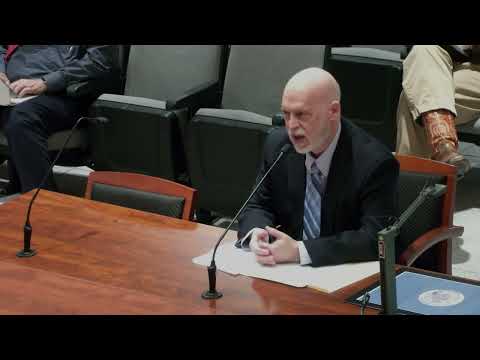
James Vince, a partner at Malden & Jenkins, presented the city’s fiscal 2024 financial audit and told the Jackson City Council the auditors issued an unmodified opinion, meaning “the financial statements as presented are materially correct.” The audit also triggered a required single‑audit because the city expended about $5.5 million in federal funds, including coronavirus state and local fiscal recovery funds, Vince said.
Despite the clean opinion, Vince and his firm reported material weaknesses and several repeat findings in the city’s internal control structure. He identified repeats in revenue recognition, expenditure recognition, interfund‑balance reconciliations and reporting controls tied to the SLFRF grant. “We did propose and post several audit adjustment entries … which did result in some findings, some material weaknesses identified in the internal controls,” Vince said.
Council members pressed auditors and city staff about the causes and next steps. Council Member Donnell (Speaker 3) asked why findings repeated year to year; Vince said staffing turnover and a transition to new accounting and banking systems contributed to gaps in processes and documentation. City Recorder/Finance (Speaker 8) told council they are posting FY24 audit adjustments now and working to tighten processes going forward. He said the office plans to use short‑term consultants as needed and hopes to eliminate the top findings in FY25.
A number of council members raised fund‑balance concerns after auditors reported the city had exceeded appropriations across several funds in FY24. Vince said the city had about $13.1 million in general fund balance as of Sept. 30 (a preliminary estimate) and explained that some overspending has been covered through transfers and use of reserves. “If you set a budget and you plan to have X available at the end of the year and it's overexpended because controls don't catch and prevent that … that is a problem,” a council member said.
Council sought clarity on corrective‑action follow‑up. Vince said auditors provide recommendations and will work with management during interim procedures for the next fiscal year but, as external auditors, cannot perform management’s remediation work. The council discussed whether internal audit and the audit committee could track in‑year progress to prevent repeats; the city’s internal auditor offered to review corrective‑action plans and point out potential weaknesses before they’re finalized.
The presentation prompted questions about timing for the FY25 audit. City staff said they aim to issue the FY25 report in late March or early April if management can deliver an adequate trial balance in December or January.
Next steps: Audit committee follow‑up, posting of audit adjustments, and implementation of corrective‑action plans; staff said progress will be reported to the audit committee and council.