Get Full Government Meeting Transcripts, Videos, & Alerts Forever!
Get email alerts on the Economic Development topic
No spam. Unsubscribe anytime.
Iron County inland port reports rail and tenant growth; officials outline tax-increment reinvestment plan
Summary
Port officials said transload facilities have processed about 620 railcars and more than 100 million pounds of material; Hive Plastics will open next month with phased hiring; port staff outlined tax-increment mechanics to fund infrastructure and potential incentives tied to capital investment.
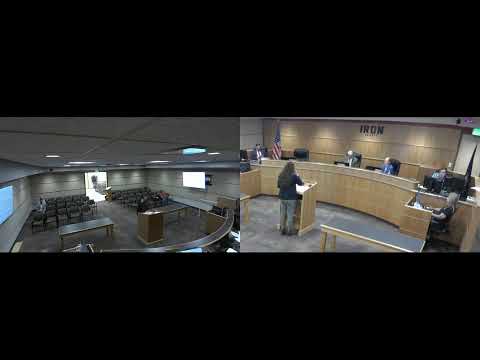
Danny Stewart, representing the Iron Springs Inland Port, updated the Iron County Commission on progress at the inland port project area and described operations, rail activity and early tenant commitments at the county meeting.
Stewart said the port’s transload facilities (RailSync and Savage) have processed roughly 620 railcars and over 100 million pounds of steel and lumber; RailSync reported more than 109 million pounds as of the morning of the presentation. He described the Hive Plastics tenant — a 23,000-square-foot plastics facility expected to open next month — that plans staged hiring (a handful of initial employees, 15–20 within six months, and 40–60 in 4–5 years) and will coordinate training with Southwest Tech.
On financing, Stewart explained the port’s tax-differential (tax increment) approach: the port captures 75% of the increment for project-area reinvestment while 25% flows to conventional taxing entities. From the 75% pot, Stewart said typical allocations could include a developer rebate (example: 10% of the 75% to a company as an incentive), 5% to the port for administration, and the remainder for infrastructure such as roads, sewer and utilities. Stewart said incentives would be performance-based and tied to capital investment thresholds (e.g., 25M = 10% rebate; 50M = 20% rebate; 100M+ = up to 30%).
Commissioners asked about return on investment, job creation, potential school-district impacts and rail service. Stewart said most new manufacturing jobs are filled by existing local residents and that the port will negotiate developer agreements to address specific fiscal concerns such as school impacts. On rail, Stewart said rail days of service could increase with more demand and noted new rail-market competition (BNSF leasing UP lines) may improve service. He also noted the USDOT RAISE planning grant will fund infrastructure and rail-market studies.
Next steps: Stewart said the port will present proposed parcels for board consideration in coming months, and commissioners said they expect coordination on use of captured increment to support Iron Springs Road and other infrastructure.