
Local donor’s $33 million education gift and AI proposal spotlighted as council weighs recruiting remote workers
Get AI-powered insights, summaries, and transcripts
Sign Up Free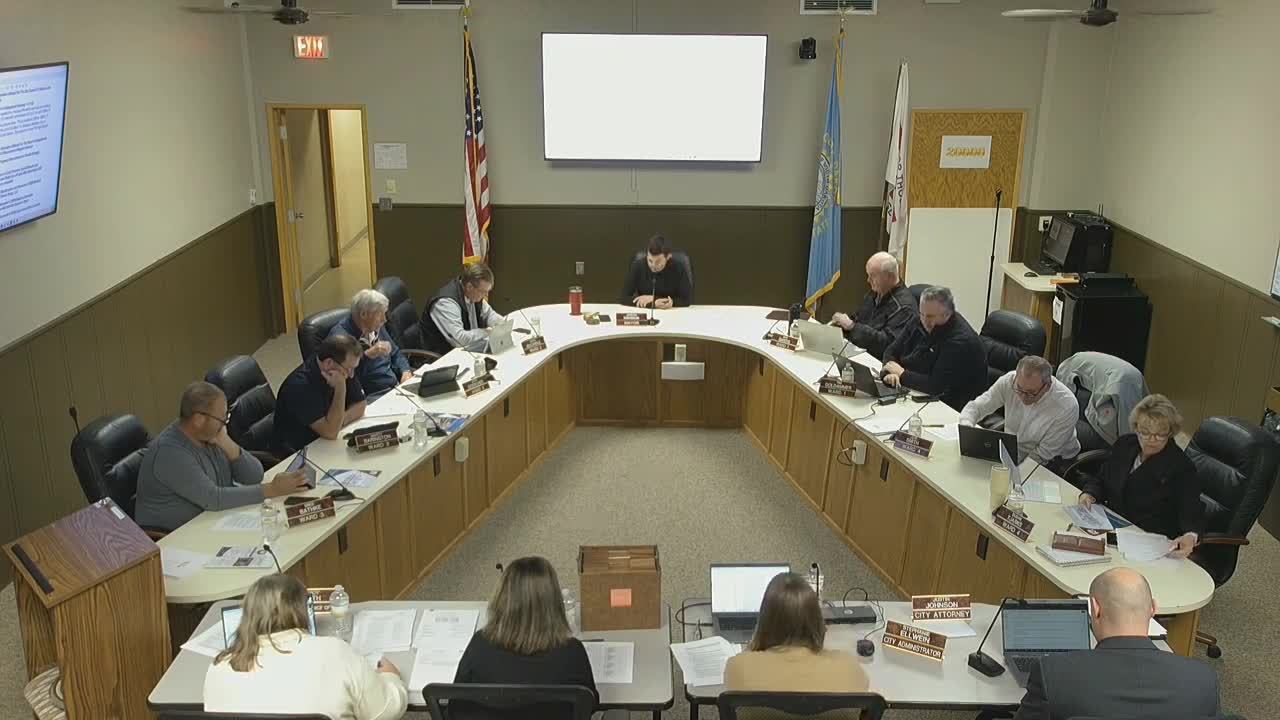
Summary
Businessman Roger Musick urged the council to reallocate promotional dollars and use a $33 million education gift plus AI tools to recruit remote workers and young families, proposing internships, a young‑family advisory committee and a targeted marketing push to grow Mitchell’s population and workforce.
Roger Musick presented a detailed recruitment strategy to the Mitchell City Council on Nov. 3, asking the city to use a $33,000,000 gift for education and existing fiber infrastructure to attract remote workers and young families to Mitchell.
Musick said he used AI to generate a 14‑page report comparing Mitchell to larger Midwestern cities and recommended building an AI calculator to demonstrate potential cost‑of‑living savings for prospective movers. He argued the city should shift promotional spending away from tourism toward a focused “move to Mitchell” campaign, suggesting roughly 70% of current Corn Palace recruitment funds be repurposed and that social media videos, Palace Perks and a small monetary welcome incentive be used to get new families connected.
Councilmembers asked about targeting, tracking and housing supply. Mike Lordson of the Mitchell Chamber and Development Corporation said the chamber’s community concierge program and Palace Perks have helped move families—he reported 52 families relocated via a $1,000 incentive and roughly 20 through a $100 program—and that Minnesota has been a primary source of newcomers. Musick told the council the gift could subsidize graduate coursework for teachers (a $14,000 benefit) with a five‑year retention requirement to improve schools and support recruitment.
Musick also proposed stronger internship programs, a rotating Young Family Advisory Committee (10–12 people), and repackaging positive community stories for social media. He emphasized that recruiting residents first would organically stimulate retail and other employers. The council asked staff to consider logistics and how any reallocation would interact with existing development corporation and chamber programs; Musick invited further questions via email and the presentation concluded.