Get Full Government Meeting Transcripts, Videos, & Alerts Forever!
Get email alerts on the Workforce Development topic
No spam. Unsubscribe anytime.
Workforce Southwest Washington outlines services, EXA outcomes and local partnerships to Battle Ground council
Summary
WSW described its youth and adult workforce programs, co-location at the Battle Ground Family Resource Center, and EXA results showing strong ROI and improved participant wages; council asked about eligibility and school partnerships.
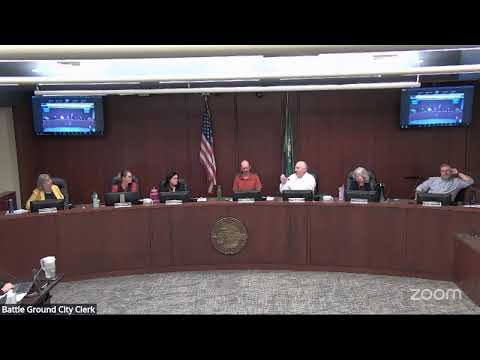
Representatives from Workforce Southwest Washington (WSW) presented to the council on Sept. 15, describing regional workforce programs, funding and local partnerships.
Lynn Love (program manager) and Sean Moore (business engagement lead) told the council WSW uses federal, state and private funds to support employer-facing services and wraparound programs for job seekers. They highlighted two customers: businesses (to help recruit and retain talent) and residents (to upskill and place workers into living-wage jobs).
WSW described the Economic Security for All (EXA) program as a key investment: locally the program costs roughly $6,000 per participant over five months and, WSW reported, has driven sizable returns — moving median participant annual wages from under $10,000 to about $50,000 per year in pilot cohorts, and statewide the program recently was codified into law.
WSW said youth services (16–24) are available through the Next program and that WSW will begin co-locating youth services this month at the Battle Ground Family Resource Center. The organization emphasized partnerships with local employers, area schools (including Battle Ground High School) and colleges to provide internships, apprenticeships and job-shadow opportunities. WSW cited specific success stories: a university intern whose design work was taken to production at a Ridgefield manufacturer and students placed through medical-assisting programs.
Council members asked about eligibility and access; WSW said youth programs focus on "barriered" youth (low-income, foster youth, homeless or parenting) while adult services are broadly available to those seeking employment or upskilling. Staff indicated WSW seeks deeper collaboration on advisory panels, strategy sessions and grant partnerships.
What happens next: WSW will co-locate youth services at the Battle Ground Family Resource Center and staff encouraged council involvement on advisory boards and publicizing workforce opportunities.