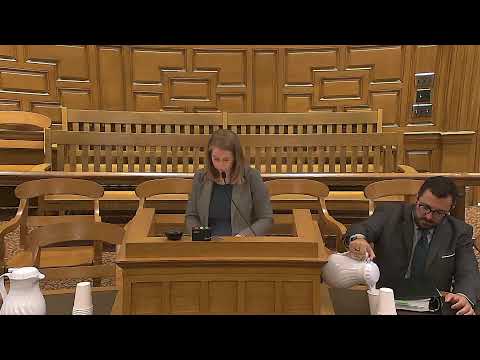
Panel Weighs Evidence Standard in Bridgewater Civil‑commitment Appeal
Loading...
Summary
Appellate counsel argued Bridgewater State Hospital lacked fact evidence to show future risk of serious harm, while the hospital defended its expert's evaluation and records review; the panel pressed both sides on reliance on criminal charges and expert opinion.
The court heard a challenge to a lower‑court order committing a respondent (CB) to Bridgewater State Hospital. Appellant counsel Eric Beale argued that Bridgewater’s case lacked percipient witnesses and that an expert’s opinion relying on criminal allegations and records cannot substitute for factual evidence of violent behavior required by Chapter 123 prong‑2 standards.
Beale told the panel that “there was simply no fact evidence that would have shown beyond a reasonable doubt that CB could not have been hospitalized at a locked DMH facility” and criticized the trial judge for relying on criminal filings and expert hearsay.
Robert Conley, representing Bridgewater, said Dr. Kelly’s evaluation, Bridgewater records, and CB’s presentation supported commitment. Conley acknowledged charges are allegations but argued probable cause and documented clinical presentation feed into a professional risk assessment sufficient under precedent.
Justices explored whether expert opinion, standing alone, can sustain a beyond‑a‑reasonable‑doubt finding about future risk; the case was submitted for decision.