Get Full Government Meeting Transcripts, Videos, & Alerts Forever!
Get email alerts on the District Budget topic
No spam. Unsubscribe anytime.
Superintendent warns redistricting, benefits and new buildings make 2026–27 Cheshire budget unusually uncertain
Summary
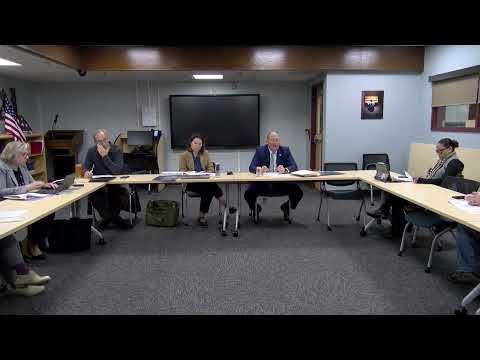
At a Cheshire School District finance meeting, Superintendent Dr. Soler previewed the 2026–27 budget and said redistricting, rising medical-benefit costs, outplacement expenses and energy use for two new all-electric buildings will complicate staffing and spending decisions through January.
Superintendent Dr. Soler told the Cheshire School District finance committee that redistricting, rising benefit costs and energy uncertainty tied to two new all-electric buildings make the 2026–27 budget unusually difficult to project.
Dr. Soler opened the meeting with a packet that included last year—s superintendent-recommended budget presentation and a two-sided summary of special budget considerations for 2026–27, then walked members through the most important variables staff are modeling. "Our current, student per teacher count at the elementary level is probably as high as it's been, in a long time at 18.8," he said, adding that lowering that ratio to 18.0 under current enrollment projections would require adding about 10 staff — a step he called unlikely.
Why it matters: class-size choices and redistricting options determine how many sections the district will need and therefore influence salary and hiring costs. Dr. Soler said staff have considered five redistricting options and identify two as most viable; they are analyzing enrollment by building and grade to estimate section counts.
Benefits and outplacement. Dr. Soler said medical benefits remain one of the district—s largest single-line items, about $15 million. "A 10% increase is a $1,500,000 hit to the budget," he said, and this year—s benefit-rate projections range from 12% to 17% (last year the projection range was 12%–15% and the actual came in at 10.9%). He also warned that outplacement costs for students with specialized needs have risen this semester and are a significant variable because many placements have not yet been finalized.
Transportation and contracts. Redistricting will affect bussing, Dr. Soler said, because some neighborhoods (he cited Chapman) produce more walkers while others (Barnum) will require more buses. He estimated a bus unit at about $80 plus roughly $10 for diesel fuel per year and noted the bus contract is set to increase about 4% next year; adding buses would raise the transportation line further. The maintenance contract will go out to bid as part of reconfiguration; staff are currently budgeting a preliminary ~5% increase pending bids and minimum-wage pressures.
Early childhood and revenue. The district—s transition-kindergarten program remains in place after the statewide start-age change (moving from 5 by Jan. 1 to 5 by Sept. 1). Dr. Soler said the transition program is paid by families and indicated the budget currently includes about $170,000 tied to related revenues; the state—s Smart Start pre-K grant also reduces family costs through a sliding-scale tuition structure.
Energy and new buildings. The two new all-electric buildings add uncertainty around operating costs. Staff are modeling projected electricity use and exploring summer solar arrays to reduce long-term costs, but Dr. Soler said the district has not yet settled the grant or state-agency arrangements needed to finance some energy work and called the solar outcome a "big wild card." He said project contingencies and warranty periods should reduce near-term operating impacts but that energy consumption remains a major unknown.
Personnel and notifications. Dr. Soler said staff met with union leadership and communicated changes to staff via video; he emphasized the district will consider certifications and willingness to move when assigning teachers, and that contract language requires notifying teachers of assignment changes by June 1. He acknowledged the potential for some forced moves but said staff aim to limit disruption.
Board questions focused on estimates for outplacement increases, whether the district can renegotiate maintenance contracts or must rebid, and whether the new buildings will produce net operating savings. Dr. Soler said detailed numbers remain pending and staff expect to present fuller budget material at the January presentation cycle; the district also will review the district performance index on Dec. 4.
The meeting concluded after a brief closing exchange when a motion to adjourn carried by voice vote.