Get Full Government Meeting Transcripts, Videos, & Alerts Forever!
Get email alerts on the Public Comment And Meeting Policy topic
No spam. Unsubscribe anytime.
Public commenter warns of wildlife impacts from wind project; county attorney advises removing correspondence from agenda
Summary
A public commenter raised objections to an AES Clean Energy letter and warned wind turbines could kill bats; County Attorney Grant advised the board that reading some correspondence could create a public-forum legal issue and recommended removing 'correspondence' from regular agendas or limiting it to intergovernmental items.
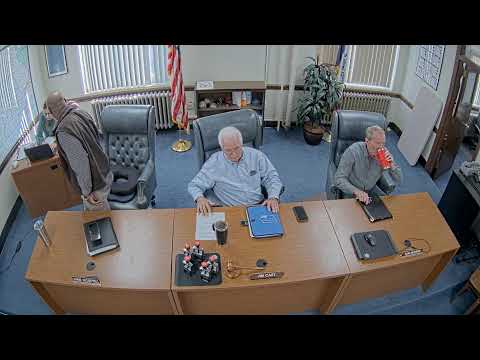
During public input at the Nov. 4 Des Moines County supervisors meeting, a resident identified himself as Andy Miller and sharply criticized a letter from AES Clean Energy, saying the letter’s proposed conservation setbacks would 'completely block all wind development in the county' and arguing that turbine wake vortices would kill bats and other flying wildlife.
"If I was gonna invent a machine that would kill bats, I'd invent a windmill," Miller said during his remarks, citing aeronautical observations and FAA materials he said demonstrate hazardous vortices.
The board did not take action on the wind project at this meeting. Instead, County Attorney Grant led an extended legal and administrative discussion about how the board handles incoming correspondence. Grant warned that reading some correspondence at a meeting could be interpreted as creating a public forum under First Amendment doctrine — which would require the board to treat the forum neutrally — and noted the staff burden of publishing all incoming correspondence (he gave an example of a single subject query that produced 2,022 emails and required substantial staff time to compile and scrub for confidential information).
Grant recommended limiting agenda correspondence to intergovernmental material (for example, communications from other public agencies) or removing the correspondence item from the regular board agenda entirely and instead making incoming correspondence available through public records requests or by placing discrete items on the agenda as separate noticed items. Several supervisors expressed support for the change; the board agreed to remove the general correspondence item from future agendas so that individual members would not selectively read letters at meetings.
The county attorney’s guidance focuses on procedural and legal risks and does not adjudicate the merits of the wind project or the environmental claims made in public comment.