
Local experiments in trees, low-impact development and lawn outreach aim to reduce runoff and heat
Get AI-powered insights, summaries, and transcripts
Subscribe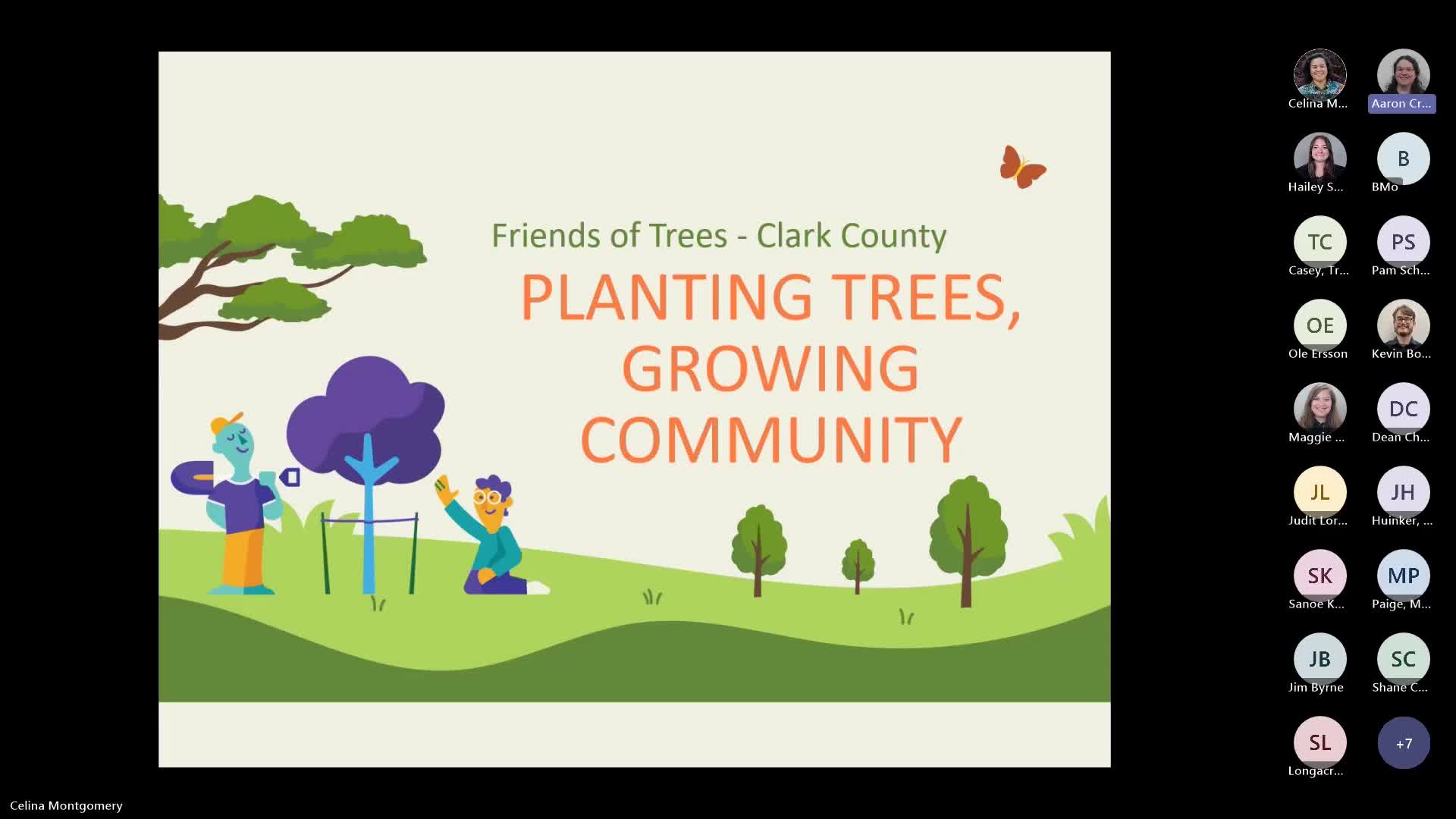
Summary
Volunteers, nonprofits and neighborhood pilots are advancing practical, low-cost ways to reduce runoff and stream heating: tree plantings, on-site stormwater retention and lawn-care behavior change.
Several community organizations presented local-scale interventions that reduce runoff, heat and pollutant loads while building stewardship.
Friends of Trees (Adela) described volunteer-driven large-stock tree plantings and a new project with Clark Conservation District to plant 50—60 large trees in the Cougar Creek/Hazeltown area in 2026; she noted the city aims for 28% canopy by 2030 and said recent mapping will guide equitable plantings.
Oleg, representing Kailash EcoVillage (Portland), described an intentional-community retrofit that retains all stormwater on-site, replaced ~5,000 sq ft of asphalt, converted lawns to organic gardens, switched roofs to metal and installed solar to power shared electric vehicles. "We retain all rainwater on-site, and we recycle graywater and nutrients from plentiful compost," he said, describing rainwater sculptures, percolation swales and cisterns used to keep water out of the combined sewer.
Melissa Brown (WSU Master Gardeners) previewed a neighborhood-focused —Green Up Your Lawn— outreach and workshop series to reduce fertilizer and herbicide use and to teach best-practice timing and slow-release products; she urged residents not to use —weed-and-feed— products and promoted neighborhood pilots, demonstration kits and library workshops.
Why it matters: trees reduce runoff and shade streams; LID and on-site stormwater retention cut peak flows and keep pollutants out of sewers; neighborhood outreach helps change everyday behavior that contributes to nutrient and pesticide loading.