Azusa Unified spotlights scratch-cooking, garden-grown produce at Slauson Central Kitchen
Loading...
Summary
At a Slauson Central Kitchen tour, Azusa Unified staff described a district-wide shift back to scratch cooking, a garden that supplies salad bars across school levels, daily operations for meal delivery, and rules that limit frying in school kitchens.
At a tour of Slauson Central Kitchen, staff from Azusa Unified described how the district is returning to made-from-scratch school meals and using produce from an on-site garden to supply salad bars at elementary, middle and high schools. Staff said the approach aims to increase student participation, reduce waste and teach students where food comes from.
Speaker 1 (staff member) framed the change as a reversal of decades of processed food service, saying that in earlier decades "we were cooking from scratch" and that as populations and costs rose districts moved toward processed foods. "Azusa was 1 of the first districts to really start bringing that scratch cooking back into schools," Speaker 1 said, attributing innovation in menu preparation to the district.
The central kitchen houses a large freezer and a dry storeroom for spices and oils; staff noted a recent delivery had temporarily filled storage. Kitchen staff described daily operations: chefs produce daily checklists and load cards; staff check temperatures, place prepared items in the walk-in, and stage meals for drivers to deliver to school sites the next day.
Staff described specific production practices and menu items. "Most of our product is stored in here," Speaker 1 said about the freezer, and staff described roasted Japanese eggplants and Swiss chard that the kitchen prepares and sends to schools. "This is what we call a project from the heart," Speaker 1 said of the garden, which staff said grows fruits, vegetables and herbs used in the central kitchen and sent to school salad bars.
On nutrition standards and preparation methods, staff said the district minimizes frying. "USDA nutrition regulations that govern our child nutrition programs don't allow us to deep fry," Speaker 1 said, adding that the kitchen uses air frying or oven baking for items such as French fries and otherwise relies on olive or canola oil when recipes require oil. Staff also described grain standards in service: "Most of our grains are whole grain. We can only use 51% whole grain items in schools," Speaker 1 said when explaining breakfast options, which include a hot item or a cold item plus cereal as a secondary choice.
Kitchen staff emphasized in-house preparation. Speaker 6 (cook/chef) walked through the prep for house-made wings, saying the rub and sauces are made on site and staged so items are ready for service. "All our sauces are made in house between our secret sauce and our ranch," Speaker 6 said.
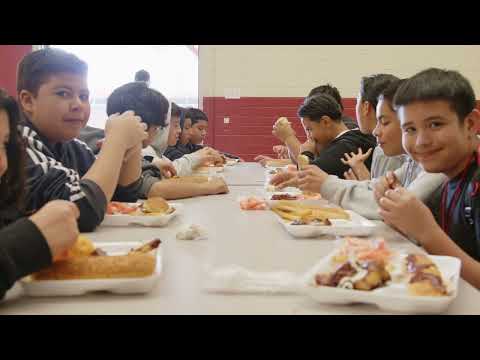
Students who tried the meals gave positive feedback during the visit. One student, identified in the transcript as Speaker 3, said a scratch-made pozole "helps me focus better in class and gives me more energy to, like, answer the questions and get it right." Another student, Speaker 7, said the lunches "give me more energy because sometimes I do track and when I eat lunch, it gives me, like, more power, like, to run faster." Staff said seeing increased consumption on scratch-cooked days leads to a more positive cafeteria atmosphere and less food thrown away.
Staff framed the program as both operational and educational. Beyond serving meals, Speaker 1 said the district wants students to learn how food grows from seedling to mature plants and to understand differences between organic and non-organic items and between scratch-cooked and prepackaged meals. Staff said they continuously monitor student feedback and participation to inform menu changes.
No formal policy vote or action was recorded during the visit; staff described ongoing operational practices and educational goals rather than a new board decision.
The district named in the transcript is Azusa Unified School District; the central kitchen identified itself as Slauson Central Kitchen and the transcript mentioned Longfellow as a receiving school site. The transcript also referenced federal nutrition rules in describing preparation limits but did not provide a formal citation for the regulation.