
Clermont County apiarist: about 180 registered apiaries, varroa mites remain top threat
Get AI-powered insights, summaries, and transcripts
Subscribe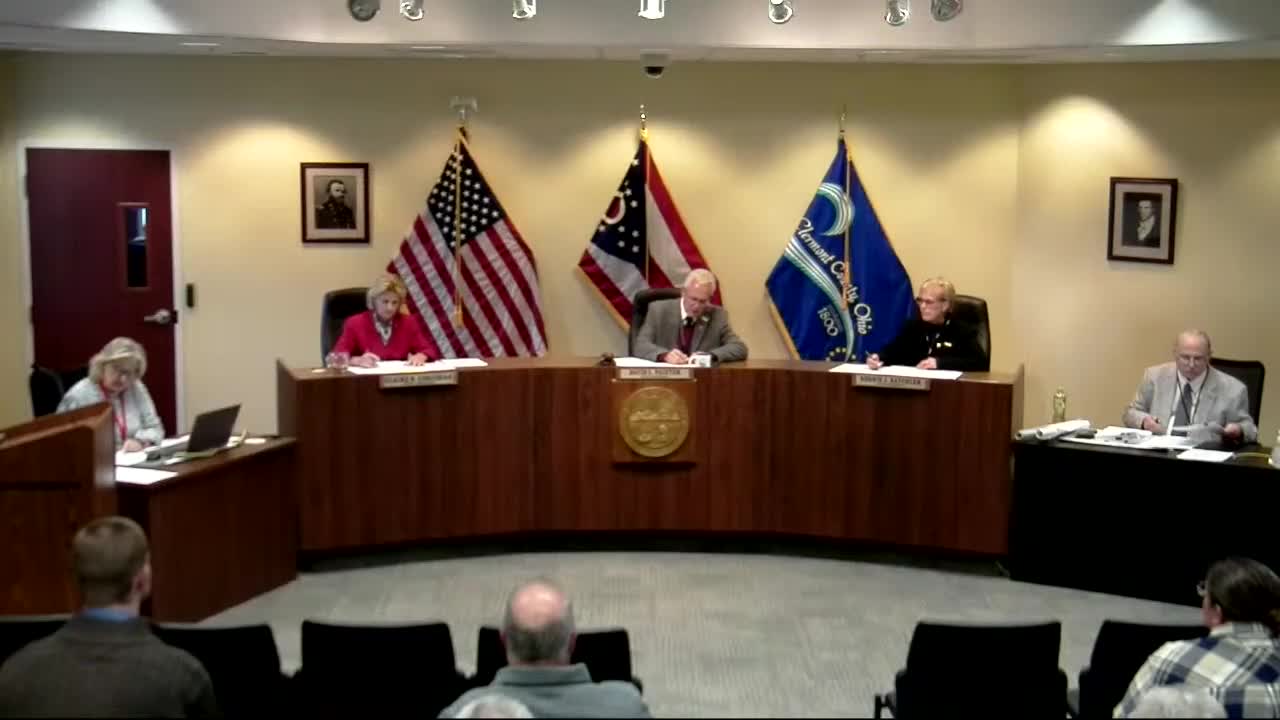
Summary
County apiarist Robin Sizemore reported roughly 180 registered apiaries and inspections of over 500 colonies this year; she said registration is now free for most beekeepers under recent state changes, with a $50 annual fee limited to queen producers.
Robin Sizemore, Clermont County apiarist, briefed the Board of Commissioners on the department’s 2025 activities and trends.
Sizemore said the county has about 180 registered apiary locations and that she inspected roughly 100 apiaries this year, covering more than 500 colonies. She described the local beekeeping community as diverse—ranging from young beginners to retirees and experienced apiarists with a decade or more of practice.
Sizemore highlighted pest and disease pressures, naming varroa destructor as “our number 1” ongoing problem. She said a small number of hives experienced issues from hive beetles and wax moths, but most colonies appeared relatively healthy.
On registration policy, Sizemore said recent state legislation removed the nominal fee for most beekeepers (previously $5 per apiary), with a new $50 annual fee applying only to queen producers—a group she estimated at fewer than 20 individuals in the county. The change was intended, she said, to encourage broader registration so pesticide applicators and other parties can better identify hive locations when spraying.
Sizemore said she plans to continue education and outreach to beekeepers in 2026 if reappointed, including advising hobbyists and sharing best practices to mitigate pest impacts.
Next steps: Commissioners thanked Sizemore and encouraged continued outreach to protect pollinators and assist new beekeepers.