Get Full Government Meeting Transcripts, Videos, & Alerts Forever!
Get email alerts on the Property Valuation topic
No spam. Unsubscribe anytime.
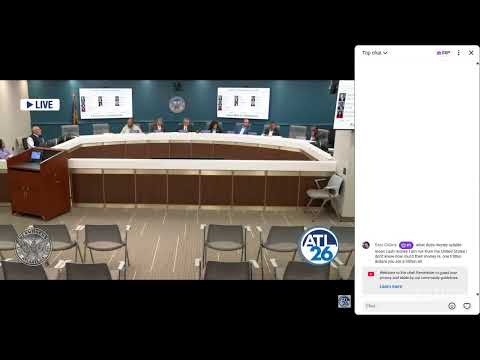
City committee hears machine-learning appraisal analysis that flags ~20% valuation outliers
Summary
A vendor presentation showed a machine-learning model trained on two years of sales and tax data that flags property valuations with roughly B110B1 20% variance for review; committee members pressed for more parcel attributes, longer time series and assessor coordination.
A presentation to the Finance Executive Committee on Nov. 12 outlined a machine-learning program designed to detect anomalies between assessed values and likely market prices.
Speakers from the vendor team said the model was trained on two years of property tax, sales and fair-market-value data and uses a gradient-boosting decision-tree approach to identify statistical outliers. "We began with historical data, including 2 years of property tax sales and fair market value data that we were provided," the presenter (Speaker 4) said, adding that results are shown through interactive dashboards and geospatial maps for staff review. The team reported that the tool initially flagged cases with about a +/-20% variance as candidates for further inspection.
Committee members repeatedly asked about data quality and scope. "Do you have information on whether some of these properties are majority residential or commercial?" asked a committee member (Speaker 6). Presenters acknowledged that richer parcel attributes (number of bedrooms, building type, owner-occupancy) and additional years of sales data would improve accuracy, and recommended visual inspections of flagged parcels as a first step.
Jerry DeLoach, chief risk officer in the Department of Finance, told the committee the administration is coordinating with procurement to ensure an RFP and transition plan so the city can continue the work without repeated short renewals. "We're working very close with DOP in a new procurement process," DeLoach said (Speaker 12).
Members urged the administration to provide district-level listings and to coordinate with the tax assessor and neighboring jurisdictions; one commissioner noted the issue is not unique to Atlanta and suggested reviewing state-level recommendations for assessor practices. The presenters and staff said they would provide more granular exports, refine filters to exclude known legitimate assessment deltas (such as successful appeals that freeze assessed value), and return with updated data and maps.
The committee did not take formal action on the presentation; staff indicated further analysis, expanded data inputs and collaboration with the assessor's office would follow.