Boston hearing warns federal, state proposals could suppress online lifelines for LGBTQIA+ youth
Loading...
Summary
Boston City Council members, city health and technology officials and dozens of community advocates told a Nov. 12 hearing that proposed state and federal ‘‘digital censorship’’ bills risk cutting off life‑saving online resources for LGBTQIA+ youth and other marginalized residents.
Boston City Council members, city health and technology officials and dozens of community advocates told a Nov. 12 hearing that proposed state and federal ‘‘digital censorship’’ bills risk cutting off life‑saving online resources for LGBTQIA+ youth and other marginalized residents.
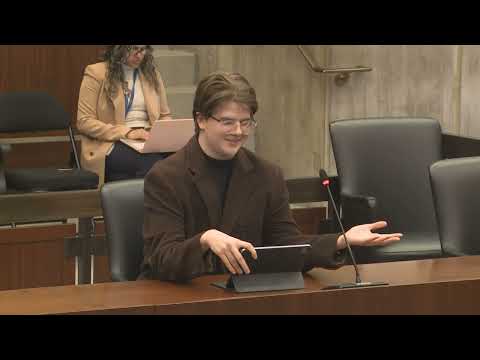
The hearing, convened by Councilor Ben Weber and sponsored by Councilor Henry Santana (docket 1670), assembled youth survivors, nonprofit leaders and city staff to describe how people find affirming health, housing and legal help online and to outline what the city can do to preserve access and privacy.
‘‘These online spaces are lifelines,’’ Councilor Santana said during opening remarks, urging the city to explore ways to protect expression, privacy and access. Youth panelists described personal rescues: Craig, a 19‑year‑old trans man who said he fled a hostile home in Texas, told the committee, "If I never got the ability to look up on my phone, if things were censored on my phone, I don't think I would be here today," crediting online organizations for helping him find shelter and support.
City officials from the Department of Innovation and Technology (DoIT), the Boston Public Health Commission (BPHC) and the mayor—s office of LGBTQIA+ advancement (MOLA) presented programs the city is using to improve digital access and help residents find services. DoIT—s Santiago Garces described a digital equity survey, expanded ‘‘Wicked Free WiFi’’ sites in neighborhoods including Nubian Square and Maverick, and device‑refurbishment work; he said the city records aggregate usage metrics (unique users, bandwidth) but does not collect the content of individual sessions and that any city records would be subject to public records requests or judicial subpoenas.
BPHC director Samara Grossman cited the commission—s mental‑health data showing LGBTQIA2S+ youth experience higher rates of persistent sadness and suicide‑related behaviors and said online connection materially reduces risk; MOLA—s Julianne Lee said connected youth are "45 percent less likely to attempt suicide" and described MOLA—s resource hub (boston.gov/lgbtq), grant programs and a digital resource sheet intended to centralize services.
Advocates argued the federal bills under discussion—including versions of the Kids Online Safety Act (COSA), the Screen Act and proposals for app‑store age verification—create vague duties and litigation risks that would push platforms to over‑remove content and to demand broad data collection to comply. Alejandra Caraballo, a clinical instructor at Harvard—s Cyber Law Clinic, warned that a vague ‘‘duty of care’’ enforced by a politicized regulator would incentivize platforms to preemptively censor material they perceive as risky, echoing past harms tied to SESTA/FOSTA.
"When social media and online community platforms face the threat of massive lawsuits, they will inevitably choose preemptive self‑censorship," Jack Imbrugamo of the Queer Neighborhood Council said. Several speakers also raised privacy concerns about proposals that require age verification or collection of biometric data; city staff said such rules could raise cybersecurity and civil‑liberties risks.
Councilors pressed city staff on gaps created by changes at local providers. Multiple speakers and councilors raised Fenway Community Health Center—s recent decisions about gender‑affirming care for minors and some 18‑year‑olds; DoIT and BPHC said they were in discussions and would follow up but noted limits in capacity and the complexity of sustaining ARPA‑funded initiatives. BPHC said it is using some ARPA funds for training, school‑based services and capacity building but acknowledged that programs funded by ARPA may need new funding sources for long‑term continuation.
Councilors and advocates discussed local remedies the city can pursue: curating and amplifying verified resources on boston.gov and MOLA channels; expanding digital navigation and device access through the digital equity fund; coordinating with community organizations to map and publicize available services; and using the council—s resolution and an expected ordinance (sponsors mentioned a Nov. 19 ordinance timeline) to press state and federal officials and to pursue legal or intergovernmental pushback.
DoIT emphasized limits on municipal authority over large platform moderation but said the city can strengthen discoverability by hosting and promoting reliable resources, expanding free Wi‑Fi access points (DoIT reported roughly 39,000 unique monthly users of Wicked Free WiFi and recent site expansions that added about 10,000 new users), and limiting unnecessary collection of demographic data to protect privacy.
The hearing produced no formal votes. Councilors and advocates left with an explicit list of follow‑up items: city staff to report back on Fenway service coverage and on whether other health centers (East Boston, South End, Boston Children—s Hospital partners) can fill gaps; DoIT to confirm exactly what metrics Wicked Free WiFi records and the thresholds for disclosure; BPHC and MOLA to provide more detail on program sustainability once ARPA funds end; and participant collaboration on a proposed ordinance and outreach plan.
Councilor Santana thanked witnesses for bringing lived experience and urged ongoing collaboration. The hearing was adjourned by Chair Weber with the council expecting to reconvene these issues as the ordinance and follow‑ups are prepared.
Provenance: transcript of Boston City Council hearing, docket 1670 (Nov. 12, 2025).