
Parents, teachers and students urge Kyrene board to weigh utilization, equity and pause before school closures
Get AI-powered insights, summaries, and transcripts
Subscribe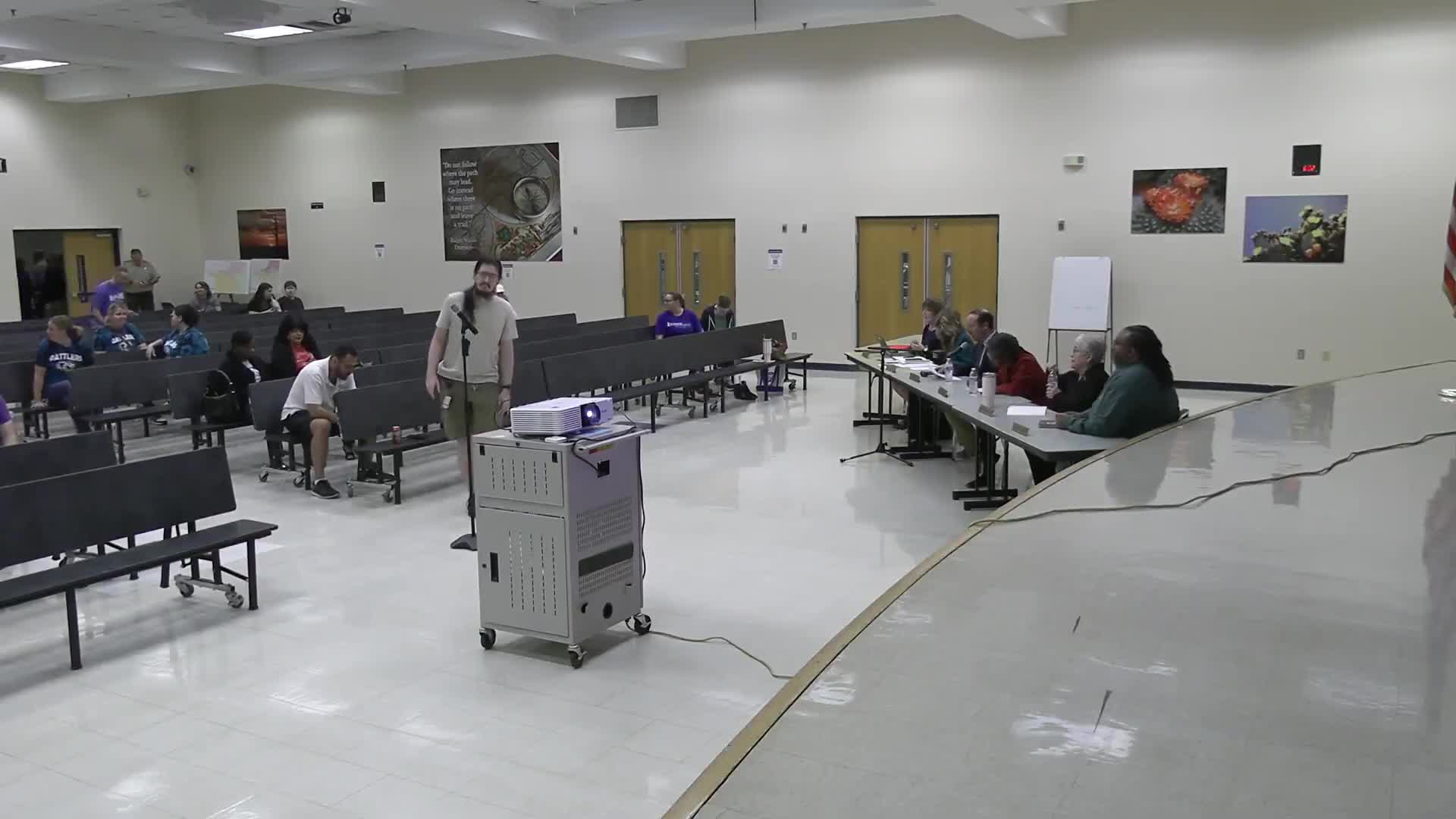
Summary
At a Nov. 12 public hearing, Kyrene Elementary School District officials presented a revised long‑range plan proposing phased elementary and middle school closures and boundary changes; community members urged the board to include utilization in its criteria, model alternatives that keep schools open, and pause after year one to study impacts.
Kyrene Elementary School District held a public hearing on Nov. 12, 2025, at Kyrene Altadena Middle School to gather community feedback on a proposed long‑range plan that would consolidate several campuses and redraw attendance boundaries. Superintendent Laura Tenas presented a modified recommendation from the district’s long‑range planning committee and said the board could consider the plan in December after additional study sessions.
The district’s proposal outlines phased elementary and middle school closures with boundary adjustments and transportation offers for some out‑of‑district regions. "No district ever wants to close schools," Superintendent Laura Tenas said, describing the plan as an effort to "preserve the excellence that defines our schools and ensure fiscal stability for years to come." She told the audience the recommendation was revised after community feedback and that maps and an implementation timeline were shown during the presentation.
Public comment ran more than an hour. Speakers across the political and demographic spectrum asked the board for clearer criteria, more transparent data and a slower implementation timeline. Jason Barrett, a parent, said families were receiving "mixed messages" about whether maps were final and urged three concrete steps: include utilization as a decision criterion, model scenarios that keep one or more K–5 schools open, and pause after year one to study real‑world effects before committing to a long‑term plan.
Several parents and staff echoed that call. "At our current 75% utilization, Mariposa is a vibrant neighborhood school," Mariposa parent Mikaela Decker said, asking the board to weigh utilization and to show what keeping additional schools open would look like for enrollment and transportation. KEA vice president Mariah Munson told the board that keeping more schools open without matching revenue would force draconian cuts: "When you have to cut $7,000,000 from the budget, then people get cut," she said, warning of potential layoffs, larger class sizes and reduced special‑area programs.
Teachers and program staff stressed the human costs of disruption. Christina Sherlock, a parent and middle‑school teacher, warned that running schools at or near 90% capacity makes inclusion and hands‑on programs harder to sustain and urged the board not to close her school: "Our special education students are not separate from us," she said, arguing that crowded classrooms reduce opportunities for integration and flexible programming.
Several speakers asked the district demographer to re‑run projections assuming closures would cause some families to leave the district or move to other schools. Long Trinh said some specialized programs — such as the traditional academy and unique open‑enrollment campuses — attract families who may not transfer automatically if their school closes.
Commenters also raised place‑based concerns. Some parents warned of substantial housing development on the West Side that they said could add thousands of students in coming years and urged the board not to close a nearby middle school before that growth arrives. Others requested clarity on district land leases and how any revenue would be used; one commenter asked for transparency because state law limits how certain nonoperating revenues can be spent.
Several parents offered constructive alternatives: volunteer marketing campaigns, partnerships with city governments, and targeted supports to boost enrollment at under‑used campuses. Rachel Chandler, principal of Kyrene Altadena Middle School, urged the board to decide with "care and commitment" while keeping unity in mind: "I choose to see this moment not only as a challenge, but as an opportunity," she said.
The board did not take any formal votes at the hearing. President Walsh told attendees the governing board will have agenda‑sized discussions of the long‑range planning recommendations at the Nov. 18 and Dec. regular meetings and said the earliest possible decision would be in December. Several speakers asked for additional public hearings if maps are revised before any final vote.
What’s next: The district will continue its scheduled study sessions and public hearings. Community members asked the board to publish the criteria and weights used to evaluate closure options, to release enrollment re‑runs that assume post‑closure attrition, and to model options that retain additional schools. The board has not yet scheduled any formal votes on the plan.