Get Full Government Meeting Transcripts, Videos, & Alerts Forever!
Utah State team launches study to pinpoint drivers of avian botulism on Great Salt Lake
Summary
Researchers from Utah State University presented a new study to identify environmental triggers and develop field assays and a reporting tool to predict and respond to avian botulism epizootics on the Great Salt Lake; they requested site‑specific GPS mortality data and historical lab records.
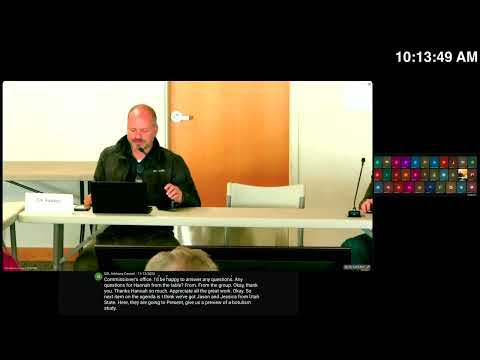
A Utah State University research team told the Great Salt Lake Advisory Council it is launching a multi‑year investigation into avian botulism on the Great Salt Lake, with the aim of identifying where and why outbreaks start and whether the toxin can be tracked in environmental samples.
The team, introduced by assistant professor Jessica Sanchez and led in the field by master's student Jacqueline Plaster, outlined laboratory and field methods, collaborations and data needs. "Botulism is a potent neurotoxin that's produced by an anaerobic bacteria called Clostridium botulinum," Sanchez said, explaining the toxin type most associated with waterfowl (type C)…
Already have an account? Log in
Subscribe to keep reading
Unlock the rest of this article — and every article on Citizen Portal.
- Unlimited articles
- AI-powered breakdowns of topics, speakers, decisions, and budgets
- Instant alerts when your location has a new meeting
- Follow topics and more locations
- 1,000 AI Insights / month, plus AI Chat