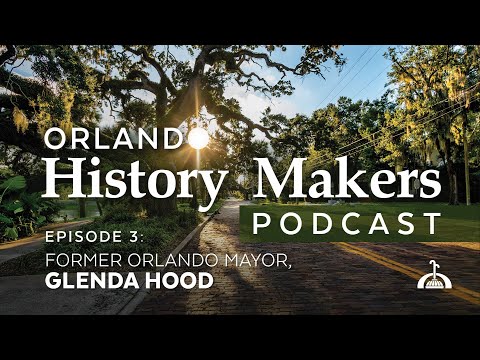
Former Orlando Mayor Glenda Hood recalls Baldwin Park, Lake Nona and building the city's arts and parks
Loading...
Summary
In a conversation on the "Orlando History Makers" podcast, former Mayor Glenda Hood described leading long planning efforts that produced Baldwin Park and the annexation that grew Orlando by about 50%, stressed neighborhood identity and citizen engagement, and recounted work to keep local museums and build the Dr. Phillips Center.
Glenda Hood, who served three terms as Orlando mayor and later as Florida’s secretary of state, told a recorded interview with Orlando City Commissioner Robert Stewart that her priorities as mayor included neighborhood identity, citizen engagement and long-term planning that reshaped parts of the city.
"I was convinced that it needed to be a neighborhood, and it needed to be able to blend with all the surrounding neighborhoods," Hood said of the large parcel that became Baldwin Park, describing a six- to seven-year base reuse and planning process that relied on a community commission. She said the effort produced "one of the most ambitious economic development projects that the city has ever undertaken."
Hood said the Baldwin Park project required sustained public outreach — she estimated "almost 250" public meetings — and included design choices meant to prioritize walkability and integration with nearby neighborhoods rather than creating an isolated, car-dependent destination.
The former mayor also discussed the city’s annexation of land near the international airport that created Lake Nona and, she said, increased Orlando's size by roughly 50%. "Lake Nona, again, is a great success story," Hood said, noting the annexation relied on a joint planning agreement with Orange County.
Hood described efforts to link cultural and economic development: she invited an Urban Land Institute advisory panel to recommend a downtown site for a new performing arts center, a process that ultimately led to the Dr. Phillips Center, and she recounted persuading Michael and Marilyn Minello to keep a folk-art collection in Orlando — a collection the city helped house in a local museum rather than transferring it to the state.
She also described using recycled materials from the former naval base — "grinding all that old concrete up and using it for the foundation" — and working with local business and economic development organizations to turn sporting events, including World Cup and Olympic soccer matches, into business relationships that brought companies to Orlando.
Hood framed her approach as one of inclusion and patience. "If you allow people to express their thoughts and opinions... that's all people want. They want to be heard," she said, while urging future leaders to "get involved," volunteer "for a purpose," and avoid pursuing a personal agenda.
The conversation is part of the "Orlando History Makers" podcast hosted by Commissioner Robert Stewart. Stewart, who said he will retire after 20 years in office, recorded the episode as "a gift of history" to the community and encouraged listeners to consult local resources for further reading on Hood’s record.
The interview offers a first-person account of major municipal planning milestones in Orlando — Baldwin Park’s base redevelopment, the Lake Nona annexation, parks and arts investments — and closes with Hood’s advice that humility, collaboration and citizen engagement remain central to city leadership.