Get Full Government Meeting Transcripts, Videos, & Alerts Forever!
Get email alerts on the Enrollment Trends topic
No spam. Unsubscribe anytime.
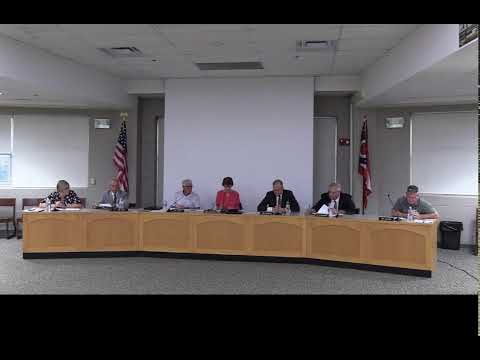
Oregon City board hears steep enrollment drop, rising career-tech and voucher use
Summary
A district presentation showed Oregon City Schools fell from about 4,600 to roughly 3,300 students since the 2013–14 baseline, with open enrollment partially offsetting losses, growing private-school voucher use and increased career-technical participation.
Nate Quig, presenting enrollment data to the Oregon City Schools Board of Education on Sept. 16, said the district’s total enrollment has declined sharply since 2013–14. "We were at about 4,600 students at one time, and we're down to about 3,300," Quig said, describing that change as "quite the loss of students."
Quig broke the decline down by building: Clay High School has fallen by about 150 students since 2013–14, Eisenhower about 55 and other schools smaller but material drops. He warned that enrollment swings of 25 to 75 students in a grade can alter staffing needs by several teachers: "When every 25 students is a teacher ... a swing of 75 is 3 teachers," Quig said.
The presenter said open enrollment is a key countervailing force. Last year, 324 students open-enrolled into Oregon City Schools (247 from Toledo) while 107 open-enrolled out, leaving a net gain of roughly 217 students. "So we're still 217 in the black," Quig said. He named about 20 districts that feed students into or draw students from Oregon City, including Toledo, Genoa, Northwood and Lake.
Quig addressed private-school vouchers and court-placed students. He said voucher awards rose from near zero in 2015–16 to about 118 last year but argued the vouchers have not produced a mass exodus: "I don't think that the vouchers are having a huge impact on our enrollment," he said. He also reported about 123 court-placed students currently in the district and noted the district pays tuition on students who leave while they remain district residents.
On college-credit programs, Quig said College Credit Plus participation has expanded and shifted largely online. "CCP is taking kids off of our campus and we're sending tuition money to colleges," he said, describing both non–career-tech and career-tech CCP growth. He also said career-technical participation has risen—reaching roughly 60–65% of juniors and seniors in recent years—which the board and administration framed as a positive pathway as perceptions of the value of four-year college decline.
Quig closed by summarizing the implications: a smaller resident base, continuing open enrollment, growth in career tech and increases in home schooling and voucher usage that complicate staffing and budget planning. The board thanked Quig for a "data-driven" presentation and the superintendent indicated staff will provide further detail in the October meeting.