Get Full Government Meeting Transcripts, Videos, & Alerts Forever!
Get email alerts on the Property Tax Rate topic
No spam. Unsubscribe anytime.
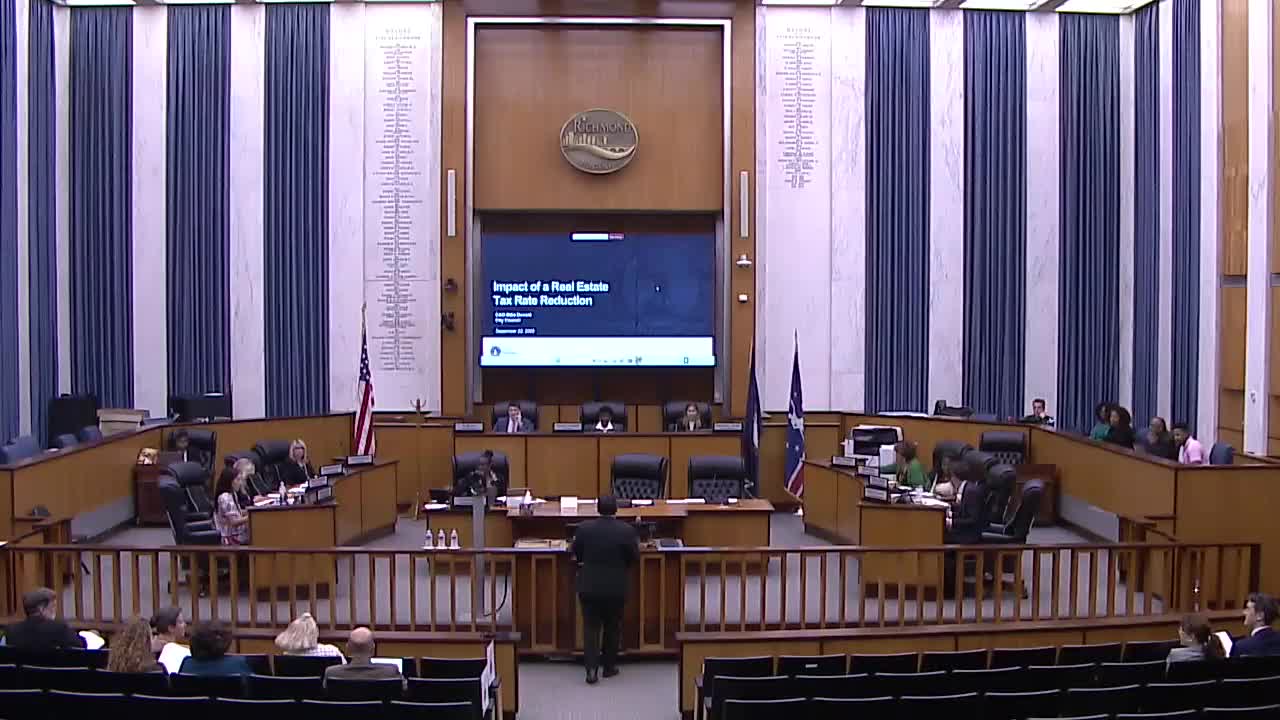
Richmond council debates property-tax cut as administration warns of $17M shortfall
Summary
Mayor Thor and the city’s chief administrative officer urged caution on a proposed 4-cent property-tax cut, saying it would reduce roughly $17.2–$17.3 million in revenue and jeopardize services and capital projects. Council members pressed for detailed assessment, audit and program data before changing the rate.
Mayor Thor and Richmond’s administration urged the City Council on Wednesday not to adopt a proposed reduction in the city’s property tax rate this year, saying the timing and fiscal consequences are risky.
"This is not the time for that decision," the mayor said, framing the proposed four‑cent cut as unlikely to help the city’s most vulnerable residents while creating a significant operating shortfall.
Chief Administrative Officer Mr. Donald presented the council with the administration’s fiscal analysis, telling members that "for every penny, we'll call it about $4.3 million in revenue," and that a four‑cent reduction would cut roughly $17.2–$17.3 million from recurring revenues and reduce about $50 million in capital project support.
The CAO listed budget pressures that would be affected by the loss of revenue, including rising collective‑bargaining costs, growing retirement liabilities (projected to reach substantial levels by FY30), debt‑service obligations and major capital projects such as the John Marshall Courthouse work and bridge replacements. He also warned that cutting the rate would either require program and personnel reductions, increases in other revenue, or reductions in transfers to schools.
Several council members said they shared constituent concerns about rising property assessments and high housing costs but urged more data before voting to change the rate. Councilwoman Gibson sought clarity on how the budget’s revenue projections relate to the calendar tax year and asked for the math showing the budgeted assessment assumptions versus actual assessment collections and the most recent surplus figures.
Council members also pressed for specifics on the implementation and reach of existing assistance programs, such as the rent‑relief application backlog and the extent to which collective‑bargaining costs are covered by the general fund. One council member urged the body to consider budgeting at the state rollback rate standard and to allow more time for public engagement on any change.
City legal staff told the council that notices tied to a new rate must be sent at least 45 days before the effective date (Jan. 1) and that, unless a new rate is adopted by the council’s Nov. 10 meeting, the statutory rollback rate would take effect on Jan. 1.
The administration acknowledged the council’s requests for additional detail and said it would provide the requested analysis, including assessment projections, surplus figures and program enrollment data, to support deliberations.
Next steps: The paper on the rate will be formally presented at a future meeting for additional questions and public engagement before a final council vote.