
Students report rise in antisemitic incidents; council points to resolutions, task force and security grants
Get AI-powered insights, summaries, and transcripts
Subscribe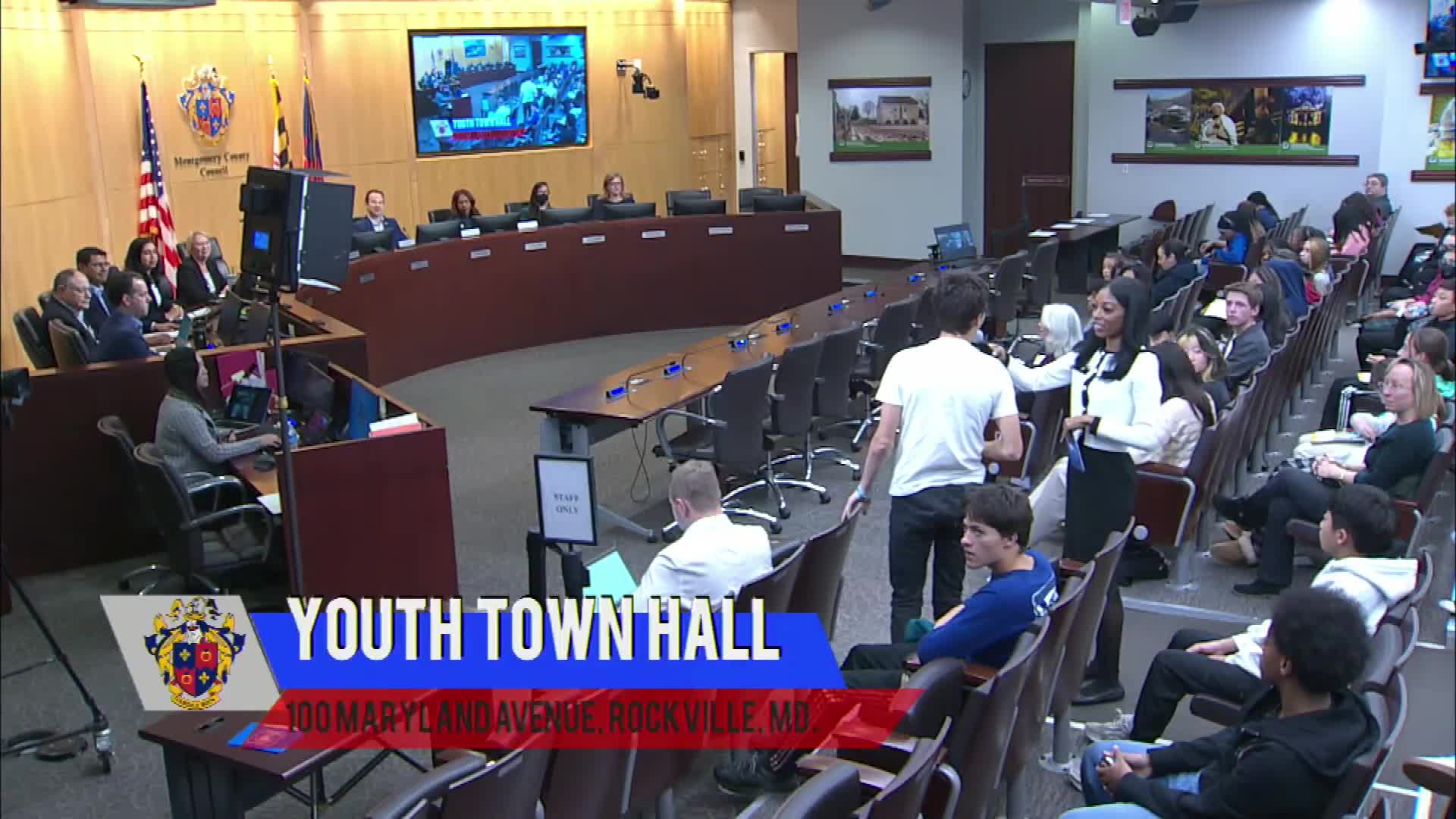
Summary
After a student described rising antisemitism in schools, council members described a unanimous anti‑hate resolution, an anti‑hate task force, educator training partnerships and nonprofit security grants to protect at‑risk organizations and students.
A student at Montgomery County’s youth town hall said antisemitic incidents have increased since October 7 and asked what the council is doing. Council members described multiple county actions aimed at combating hate and protecting students.
“Thank you for sharing,” Councilmember Andrew Friedson said, summarizing recent council activity. He said the County Council passed a unanimous resolution “to combat and address antisemitism,” convened an anti‑hate task force with a cohort focused on antisemitism, and worked with the Jewish Community Relations Council, Anti‑Defamation League (ADL) and American Jewish Committee (AJC) to provide educator trainings for MCPS staff.
Friedson also said the council has provided nonprofit security grants to faith‑based and ethnic organizations that host students, to help those organizations improve physical security. “We have, really tried to help in that regard as well,” he said.
Councilmember Evan Glass, who led the anti‑hate task force when he was council president, emphasized the county’s religious diversity and urged community members to treat one another with respect: “Montgomery County is more religiously diverse than any other community in the United States... so we all pray differently... but we gotta be kind to each other.”
The council encouraged students to report incidents to school staff and law enforcement as appropriate, and pointed to ongoing training and community partnerships as the primary means of prevention and response.