Get Full Government Meeting Transcripts, Videos, & Alerts Forever!
Get email alerts on the Board Votes topic
No spam. Unsubscribe anytime.
Board approves consent items, personnel actions and contracts; special‑education policy adopted
Summary
The Fairfield Union Local board approved the consent agenda, accepted a teacher retirement effective 06/01/2026, adopted the state special‑education model policy, approved a Vanderbilt clinical affiliation and two DataServe cybersecurity contracts; all motions were approved by roll call.
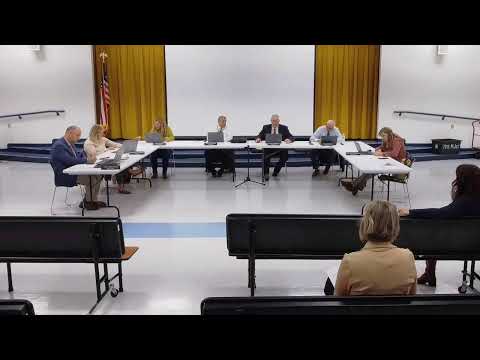
At its weekly meeting, the Fairfield Union Local Board of Education approved a series of consent‑agenda items, personnel actions and contracts in unanimous roll‑call votes.
Key actions (motions approved by roll call): - Approval of minutes from the Oct. 20 regular meeting (motion passed). - Approval of the consent agenda (financial items, donation and September food‑service report). - Acceptance of the retirement of Debbie Young, middle‑school math teacher, effective June 1, 2026; the superintendent and colleagues offered remarks praising her service before the board approved the retirement. - Approval of the substitute teacher list as presented. - Approval of two days of leave without pay for Rachel Thomas (February 24 and February 26, 2026) for parent‑teacher conference evenings. - Approval of Resolution 02/2007 authorizing OSBA to recommend policy edits in light of legislative changes (referenced House Bill 33) and Approval of Resolution 2025‑0008 adopting the state special‑education model policies and procedures (procedural/state requirement). - Approval of a clinical‑affiliation agreement with Vanderbilt University for a short‑term student‑teaching placement. - Approval of revisions to policies (items 1–53) on second reading. - Approval of two three‑year cybersecurity contracts with DataServe (a 'cybersecurity copilot' program and 'cyber essentials' server monitoring and patch management services).
The board moved into executive session under a cited provision of the 'high revised code' (noted in the meeting as section 121.22) with no action to be taken upon adjournment of the closed session.
Where the transcript recorded roll calls, the board chair or clerk called members by name and the minutes record unanimous 'Yes' votes for the items above; no formal dissent was recorded in the public portion of the meeting.