Get Full Government Meeting Transcripts, Videos, & Alerts Forever!
Get email alerts on the Empower Overview topic
No spam. Unsubscribe anytime.
Utilities tell PSC EMPOWER programs are hitting midyear targets but flag coordination and contractor payment problems
Summary
At a Public Service Commission hearing, utilities reported midyear EMPOWER progress — many electric portfolios hit roughly half of 2025 GHG targets — while commissioners pressed issues of equity, cross‑proceeding coordination (VPP, storage), contractor payment timelines and a growing debate over whether gas appliance incentives should continue.
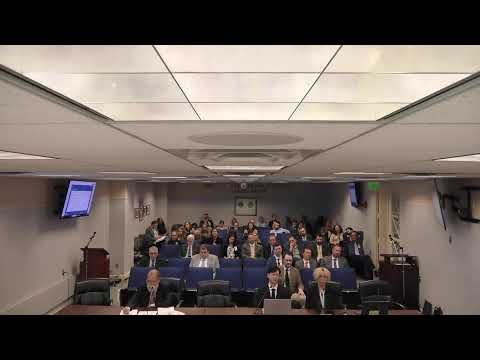
Utility officials told the Public Service Commission on Wednesday that EMPOWER Maryland programs continued to deliver greenhouse‑gas reductions and customer benefits in the first half of 2025, even as commissioners pressed them on affordability, program alignment and contractor payment issues.
BGE said its portfolio has achieved roughly 59% of its 2025 GHG savings target at midyear and reported long‑term totals including about $1.6 billion in incentives distributed since 2009 and a lifecycle reduction the presenters equated to more than 9.7 million megawatt hours. “We have abated 489,000 metric tons of carbon dioxide equivalent emissions,” Jessica Yu, a senior manager at BGE, said during the presentation. She added BGE estimates participants will save about $755 million in lifetime bill savings because of measures installed under EMPOWER.
Pepco and Delmarva said their combined portfolios are on track as well: Pepco reported roughly 174,700 metric tons of CO2e — about 45% of its annual target — while Delmarva said it has achieved about 52% of its target. PHI‑affiliated witnesses said demand response programs provided up to 283.5 megawatts of summer peak reduction across Pepco and Delmarva territories.
Several utilities described recent growth in midstream HVAC incentives and contractor networks. But commissioners — echoing contractors’ testimony filed elsewhere — pressed utilities on payment timelines and administrative costs. “We heard concerns from contractors who said waiting for payment puts small businesses at risk,” Commissioner Litton said. Utility witnesses said they have shortened many distributor payment timelines, cite fraud‑prevention checks and said specific cases are being investigated. “We’re paying distributors in less than 30 days on average,” one BGE manager said, while acknowledging verification steps slow some payments.
Commissioners repeatedly urged utilities to better align EMPOWER work with other dockets, including virtual power plant and storage proceedings, so demand‑side investments are not siloed. “We need the utilities to connect the dots so the Commission can see how EMPOWER activity ties into other filings,” Commissioner Sutchman said. Utility staff said internal coordination is underway and asked the Commission to consider policy choices that would facilitate alignment.
On administrative items, PSC staff recommended approval of Pepco and Delmarva budget shifts from a now‑sunset CHP program into midstream and small‑business incentives and urged a work group process to resolve outstanding technical issues. Staff also recommended denial of a SMECO request for pilot funding to study local distribution value; SMECO and commissioners discussed whether that analysis should instead be performed with utility‑specific inputs.
The Commission set further procedural deadlines: staff and parties will file additional comments on DHCD goals and a demand‑response status report in November, seeking more time for work group deliberations.