Get Full Government Meeting Transcripts, Videos, & Alerts Forever!
Get email alerts on the Civil Tort Damage Apportionment topic
No spam. Unsubscribe anytime.
Court of Appeals hears challenge to excluded damages and apportionment instruction in Holmes v. Smith
Summary
The Utah Court of Appeals heard argument that the trial court erred by failing to instruct the jury on apportionment for preexisting conditions and by excluding evidence of workplace‑accommodation damages (the VariDesk); the justices questioned expert conflicts and Rule 702/403 gatekeeping. The court took the matter under advisement.
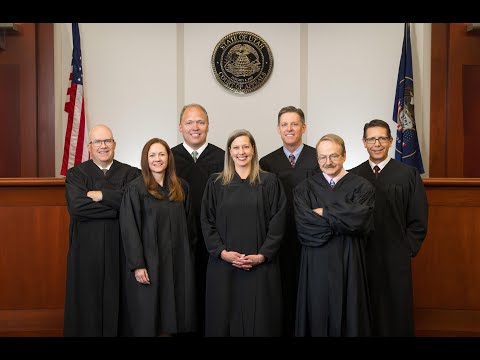
The Utah Court of Appeals heard oral argument in Holmes v. Smith on whether the trial court denied appellant Emily Holmes a fair trial by (1) failing to give a jury instruction explaining apportionment and the defense's burden when preexisting conditions are at issue and (2) excluding evidence of certain economic damages, including a sit‑stand desk described in the record as a VariDesk.
Attorney Lauren Peck, representing Holmes, told the court that Smith’s defense repeatedly emphasized preexisting degenerative conditions and that the jury should have been instructed on how to apportion damages and who bore the burden of proof. "Emily Holmes did not get a fair trial on damages," Peck said, arguing the trial court’s rulings left the jury without guidance on an affirmative defense the defense pursued throughout trial.
Peck also pressed the court to reverse the exclusion of testimony and evidence about the VariDesk, saying the desk’s projected service life and need were intertwined with work‑life expectancy and loss‑of‑earning‑capacity calculations and therefore could not be cleanly severed from the rest of economic damages. She told the panel the trial court’s exclusion under Utah Rules of Evidence 702 and 403 prevented the jury from resolving interrelated issues the experts had offered for consideration.
Appellee counsel responded that the trial record lacked the evidentiary bridge necessary to justify an apportionment instruction. Counsel pointed the panel to the district court’s written in limine ruling (record entry 1283) and said trial testimony — principally Dr. Snook’s — treated the accident injury and later degenerative treatment as two separate conditions with unrebutted testimony that the acute accident symptoms resolved before the later care. "There was no evidence of aggravation of a preexisting condition; there were two separate injuries," appellee counsel said, arguing that without trial evidence supporting apportionment, the instruction was inappropriate.
The panel repeatedly focused on how Utah law treats the difference between (a) an asymptomatic degenerative condition that is "lit up" by an accident and is fully attributable to that accident and (b) a symptomatic or degenerative condition that courts may apportion. Peck said both characterizations appeared in trial testimony: she cited Dr. Sonnenburg as using the phrase "lit up," while Dr. Snook testified the accident effects had resolved and later complaints were unrelated. Several justices probed whether the record contained the kind of non‑arbitrary basis a jury could use to apportion damages.
Justices also examined the trial court’s decision to exclude Layton’s opinions on work‑life expectancy and related VariDesk damages, citing alleged inconsistencies: the panel heard that trial counsel had proffered a 25‑year work‑life figure, while replacement or useful‑life estimates for the VariDesk in the record were shorter (counsel referenced a three‑ to five‑year replacement interval and a lifetime warranty disclosed in supplemental filings). Appellee argued those internal inconsistencies rendered Layton’s opinions unreliable under the court’s gatekeeping function and therefore properly excluded under Rule 702 and Rule 403.
The panel further questioned whether medical records and other underlying materials were properly authenticated under the business‑records exception (Rule 803(6)); appellee urged that no custodian certification or equivalent foundation appeared in the record and asked whether an expert witness’s general familiarity with such records sufficed to admit them as business records.
Peck countered that under Utah practice an expert may rely on medical records and that the defense had stipulated to authenticity; she cited Belknap v. Graham and other authorities in arguing the instruction on preexisting conditions is required when a defense asks for apportionment, and she said the trial court’s failure to instruct, coming just before closing, prejudiced Holmes.
The panel did not rule from the bench. The court thanked counsel and said it would take the matter under advisement and issue a written opinion in due course.