Chatham County presents FY2027–2033 capital improvement plan; priorities and changes outlined
Loading...
Summary
Chatham County presented its recommended FY2027–2033 capital improvement plan Nov. 3, proposing a mix of debt‑funded large projects and capital‑reserve funded smaller projects and identifying schedule changes and studies across schools, parks and county facilities.
County Manager Brian Thompson presented the recommended FY2027–2033 Capital Improvement Plan to the Board of Commissioners on Nov. 3, describing it as a seven‑year planning document that is distinct from the operating budget but that will inform next year's budget decisions.
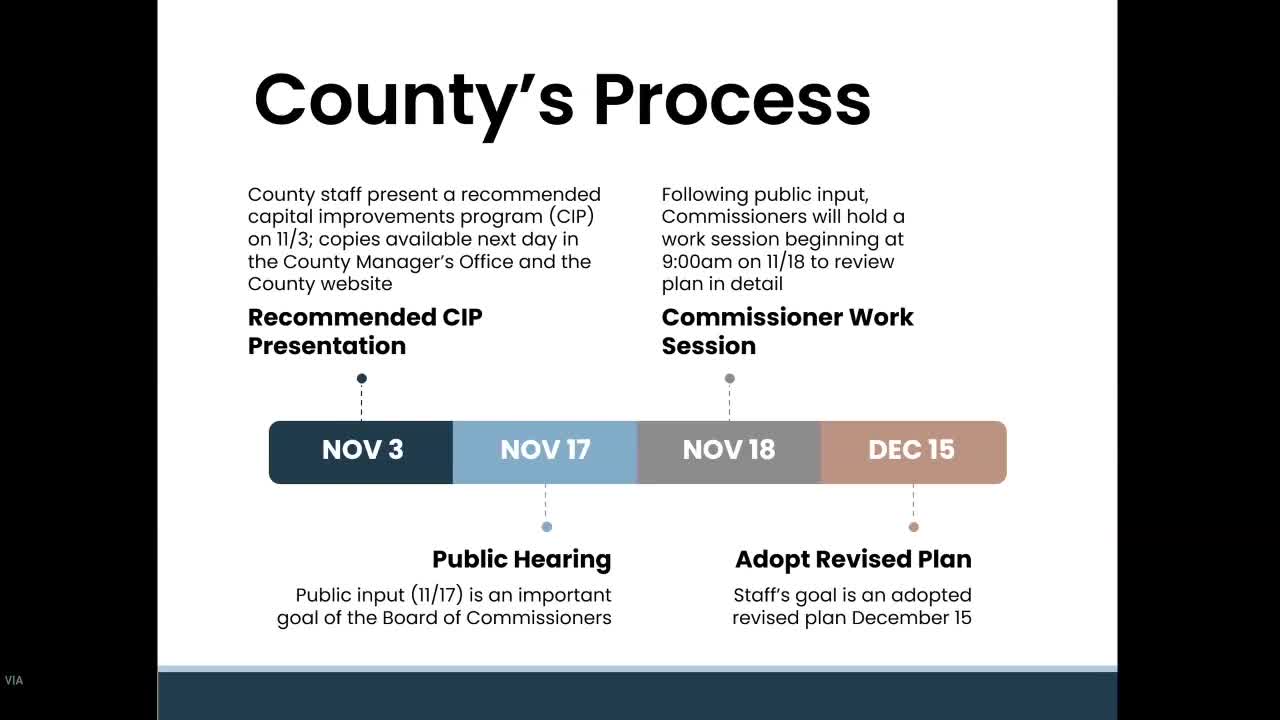
Thompson said the CIP aims to balance debt financing for large projects with a capital reserve for smaller pay‑as‑you‑go projects and noted staff seeks to approve the CIP by Dec. 15 following a public hearing Nov. 17 and a work session. "The CIP is a plan. It is not a budget," Thompson said, adding that the county programs projects to avoid being surprised by operating costs once a project moves into service.
Highlights and changes included delays for several Chatham County Schools projects because of lower‑than‑expected enrollment (for example, the Margaret Pollard expansion was pushed to FY29 and mobile classrooms were pushed to FY29), increased estimated construction cost for the Northeast District Park dam requiring removal and rebuild of the existing dam, and removal of restroom projects placed in N.C. Department of Transportation right‑of‑way.
Thompson also recommended pausing the full food‑waste composting facility pending results from a pilot program and commissioning a feasibility study for a potential transfer station. He told the board that the county recently improved its debt rating with Moody's to AAA on its most recent borrowing, which reduces borrowing costs; he cited a 2.54% true interest cost on a recent refunding.
Board members asked about timing and the possibility of adding referendum items or land purchases in response to priorities that may emerge after the strategic retreat; staff said mid‑course adjustments are possible but depend on the project type and funding vehicle.
Why it matters: The CIP directs capital priorities for the county for the next seven years and shapes future operating costs, debt load and project schedules. Decisions about project timing, debt issuance and use of capital reserves matter to county taxpayers, schools and service providers.
What's next: A public hearing is scheduled Nov. 17 and a work session Nov. 18; staff will return with detailed materials and modeling to support board direction toward a potential Dec. 15 approval.