Chatham County approves $526,000 fee in lieu, waiving Vickers Village affordable‑housing element
Loading...
Summary
After extensive debate, the board approved a revised fee‑in‑lieu agreement for the Vickers Village development that increases the per‑unit payment to $52,600 (total $526,000) and waives the project's affordable‑housing element; commissioners discussed alternatives for investing the funds and concerns about honoring prior commitments.
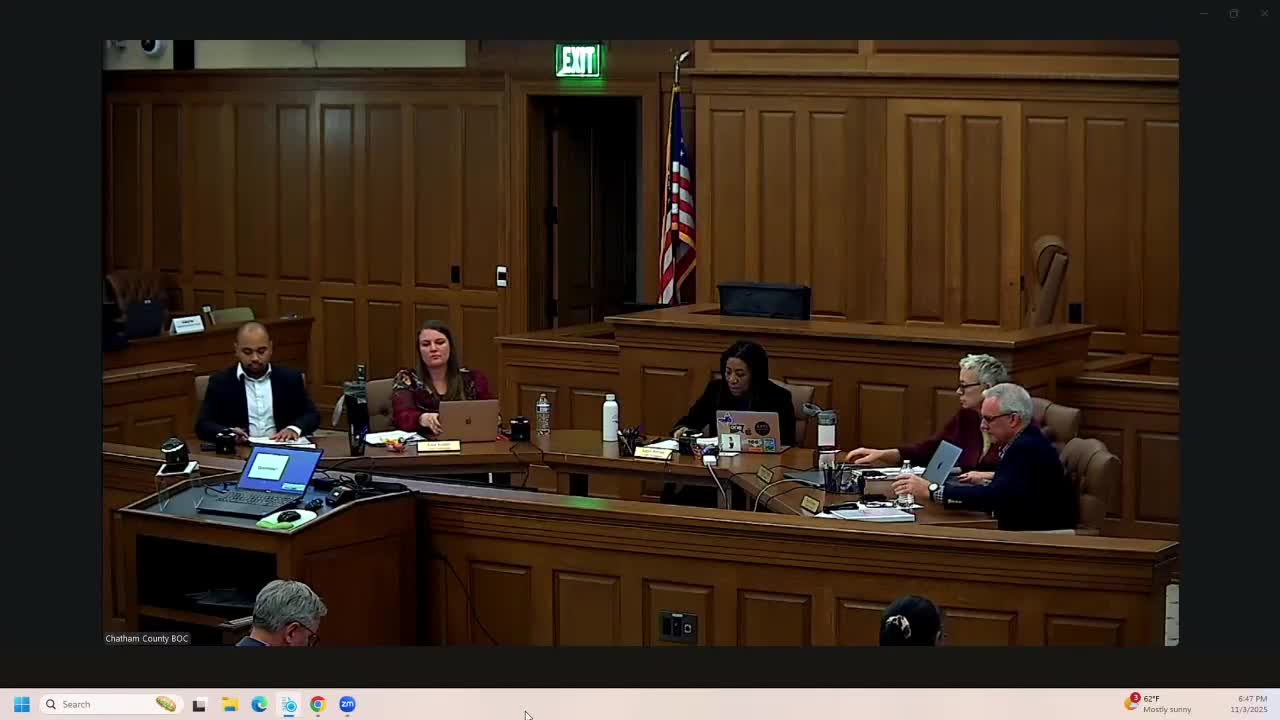
The Chatham County Board of Commissioners voted Nov. 3 to accept a revised fee‑in‑lieu agreement for the Vickers Village compact community in Northeast Chatham, replacing the project's planned on‑site affordable units with a cash payment.
Jamie Andrews, community development officer, told the board rising construction and market costs mean the county would need to subsidize the developer's affordable units far more than originally expected: "Our current estimates reflect that if we were to proceed, the average unit would require something like $155,000 per unit," Andrews said.
Andrews said the original contractual fee in lieu was $47,000 per unit (total $470,000) but staff negotiated an increase to $52,600 per unit to track inflation via the consumer price index, which would produce a single payment of $526,000 in exchange for waiving the affordable‑housing element and the compact‑community conditions tied to it.
Commissioners probed whether the renegotiation began with the county or the developer, the timing of payment, and what the county would do with the funds. Andrews said the fee is conveyed when the developer sells a lot to a residential builder and that payment is expected "pretty quickly" as lots are sold.
Deliberations highlighted tradeoffs: multiple commissioners argued that the county's money could buy greater affordability at scale if pooled (for example, as a revolving loan fund, or leveraged into LIHTC projects) rather than funding 10 scattered units. Commissioner Delaney said he preferred the board remain committed to the 2021 agreement and opposed accepting the fee in lieu; Commissioner Gomez Flores favored the fee and noted the difference in scale between $526,000 and the roughly $1.7–2.0 million estimated to deliver 10 affordable homeownership units under current cost projections.
A motion to accept the revised fee‑in‑lieu agreement was moved and seconded. The chair announced the motion carried.
Why it matters: The board's decision converts a site‑based affordable housing commitment into a one‑time fund that staff will invest in other housing strategies. Commissioners emphasized the decision reflects current market realities and the board must choose how best to invest the proceeds to support housing affordability countywide.
What's next: Staff was not asked for a specific allocation at the meeting but listed options (revolving loan fund, partnering on low‑income tax credit projects, Habitat for Humanity collaboration). The board requested additional proposals for how to deploy the $526,000 to maximize affordable housing impact.