Chatham County commissioners back constitutional amendment to limit corporate personhood
Loading...
Summary
The Chatham County Board of Commissioners on Nov. 3 adopted a resolution opposing the Supreme Court''s Citizens United decision and supporting a constitutional amendment to clarify that corporations are not natural persons and that money is not protected speech, forwarding the resolution to the county''s congressional delegation.
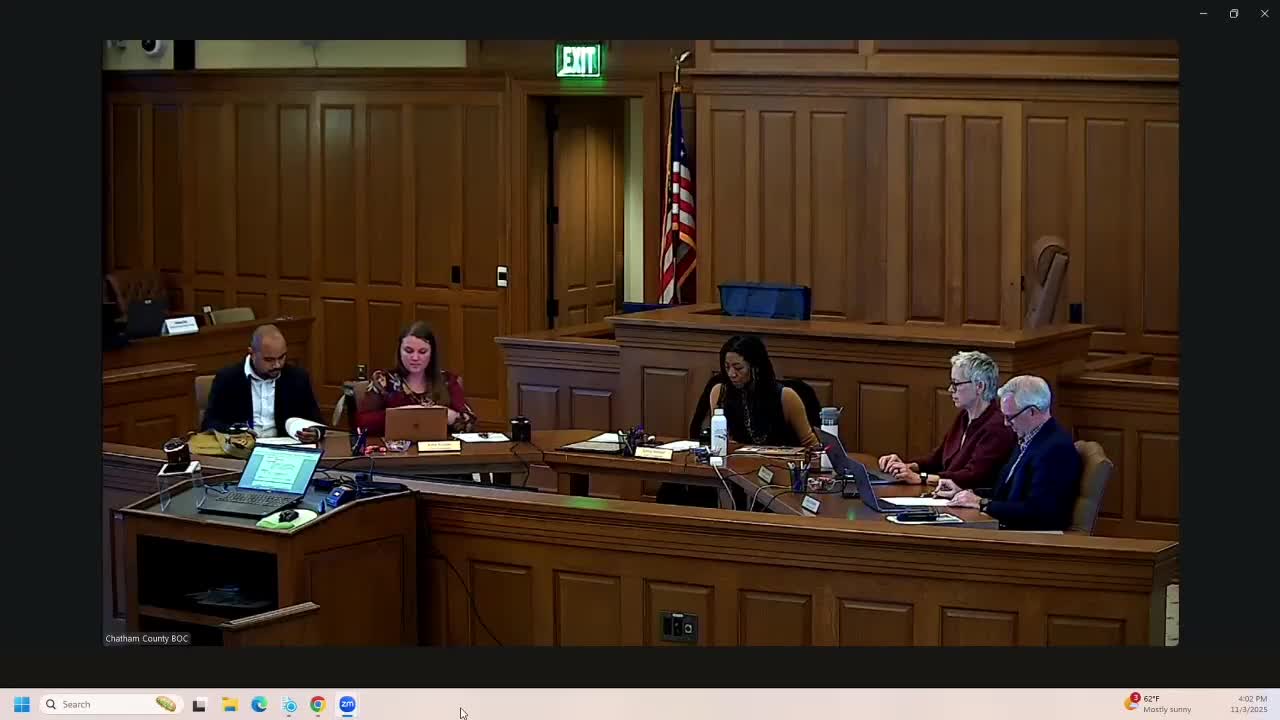
The Chatham County Board of Commissioners voted Nov. 3 to adopt a resolution urging a constitutional amendment to make clear that corporations are not natural persons and that money used to influence elections is not equivalent to protected speech.
Chair Amanda Howard read the draft resolution, framing it as a response to the U.S. Supreme Court''s 2010 Citizens United decision. The text cited Justice John Paul Stevens's dissent and said the ruling "severely hampers the ability of federal, state, and local governments to enact reasonable campaign finance reforms."
Commissioner Robertson called the resolution "very worthwhile" and said the influence of corporate spending affects day‑to‑day issues, citing prescription costs and energy policy: "It impacts not just the price of prescriptions... It impacts the ability of Duke Energy to be able to influence politicians," she said.
Commissioner Delaney raised a procedural question about the board''s historical practice and whether issuing statements on federal legal matters is within the board''s usual scope. "I don't recall that we have ever considered, let alone pass that category of resolution," Delaney said, asking whether the board should consult its attorney about potential constraints under state law.
After discussion, a motion to adopt the resolution was made and seconded and the chair announced the motion carried. The board directed that the adopted resolution be forwarded to Chatham County's members of Congress.
Why it matters: The resolution is symbolic and adds Chatham County to other local governments supporting an amendment that would give Congress and state legislatures greater authority to regulate campaign contributions and expenditures. The board's action does not itself change law but signals local support for national legislative change.
What's next: The resolution will be sent to the county's congressional delegation; the county did not adopt specific legal language beyond the resolution text and did not direct staff to pursue litigation or other legal actions.