County studies three-year opioid plan and seeks to use settlement funds for community health positions
Summary
Public-health staff presented an opioid-action plan that would use opioid-settlement dollars to fund a three-year pilot of a community health coach and several new public-health positions; staff requested a county contribution and asked for direction to develop a multi-year financing plan.
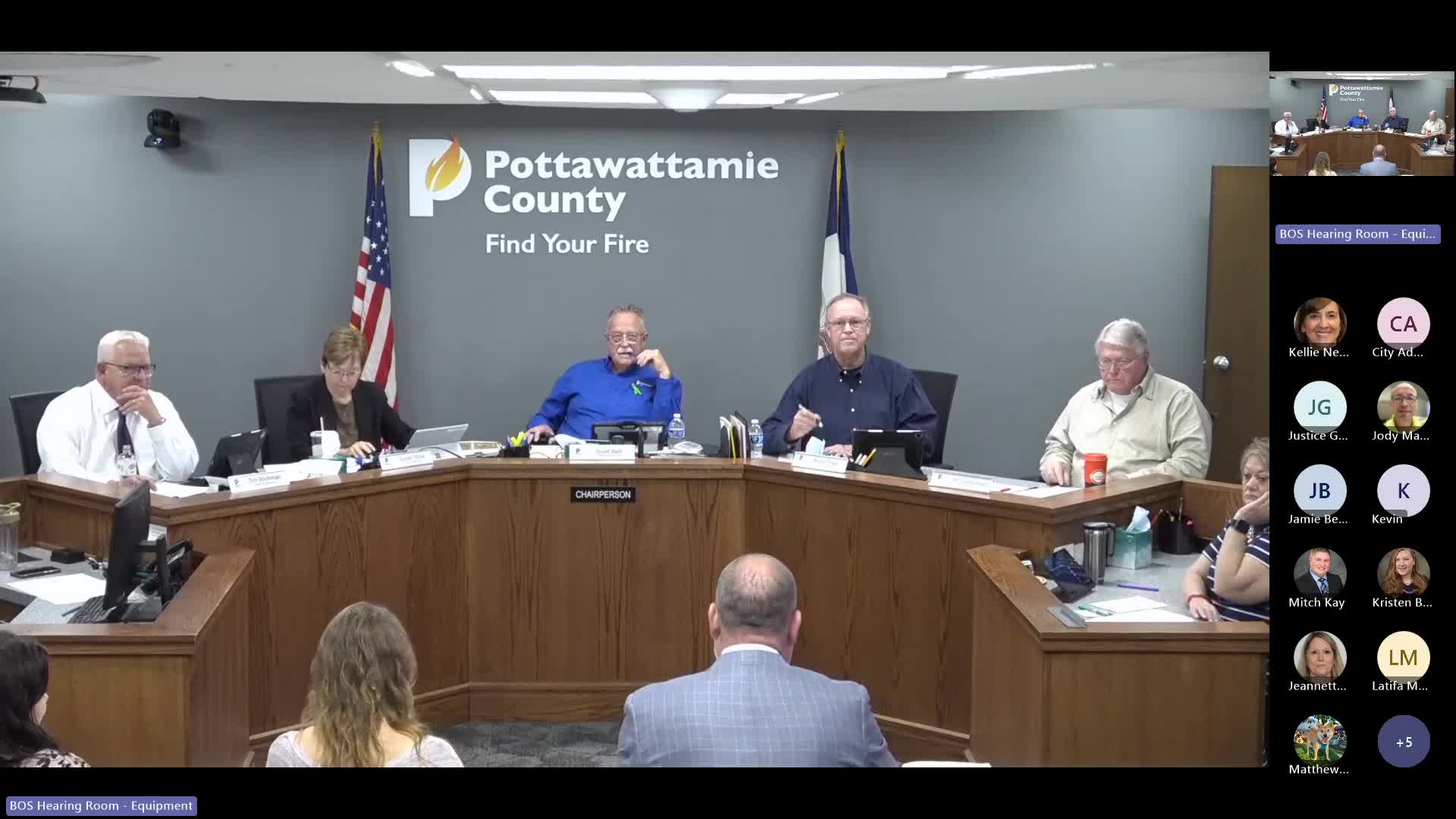
Pottawattamie County public-health staff used a study session to present a proposed opioid-action plan and a package of staffing and technology requests intended to scale outreach and case management across the county.
What was proposed: Staff asked the board to consider a county contribution (staff asked for an example $100,000) to support a three‑year pilot that would place a high‑risk community health coach under the payroll and management of the Jennie Edmonson Foundation (a local foundation and hospital partner). Additional proposed positions and services in the packet included a community health and opioid strategist, community health organizers/health equity coordinators, a clerk 2 to conduct screening and referrals, a preparedness coordinator repositioned to focus on opioids, a StagedCares subscription and an ODMAP API integration for overdose-data mapping. Staff said existing community health coaches and hospital partners would support case management and that Unite Us and local EMS/police data would be combined to track name-level outcomes.
Funding questions: Staff reported approximately $1.9 million in opioid‑settlement funds in county accounts and annual settlement receipts of roughly $120,000 but emphasized the funds are finite and that some settlement streams front-load payments; supervisors pressed staff on long-term sustainability, asking for a 3–5 year funding plan and clarity on what continued support would look like if state or other funds lapse. Supervisors voiced concern about hiring employees on grant streams that may not be renewed and requested contingency plans that preserve staff knowledge and continuity.
Data and outcomes: Public-health presenters said early data show promise — case-level tracking for community health coach interventions has reduced repeat 911 calls in some cohorts — and said the county needs name‑level datasets (Unite Us, ODMAP, hospital and EMS feeds) to monitor outcomes and quantify the program’s success.
Next steps: Staff agreed to prepare a multi-year funding plan and present specific contract or MOU language for any partnership (including agreements with Jennie Edmonson Foundation or the hospital) and to work with the county auditor to ensure all expenditures comply with settlement requirements. The board treated the item as a study session and gave direction to return with a funding plan, job descriptions and contract terms before any appropriation.